
Japan gives first-time visitors an amazing mix of buzzing cities, ancient temples, and beautiful scenery. The Golden Route links Tokyo, Hakone, Nagoya, Kyoto, and Osaka in one trip, so you get a real taste of the country. In just ten days, you’ll wander from busy shopping streets to peaceful bamboo forests.
This itinerary takes you through Japan’s top destinations and gives you enough time at each stop to actually enjoy it. You’ll see big landmarks like Mount Fuji and Fushimi Inari Shrine, soak up Kyoto’s traditional side, and dive into modern fun at places like Nintendo World in Osaka. Each city connects easily by train, so the journey feels smooth, and you get to experience Japan’s many sides as you go.
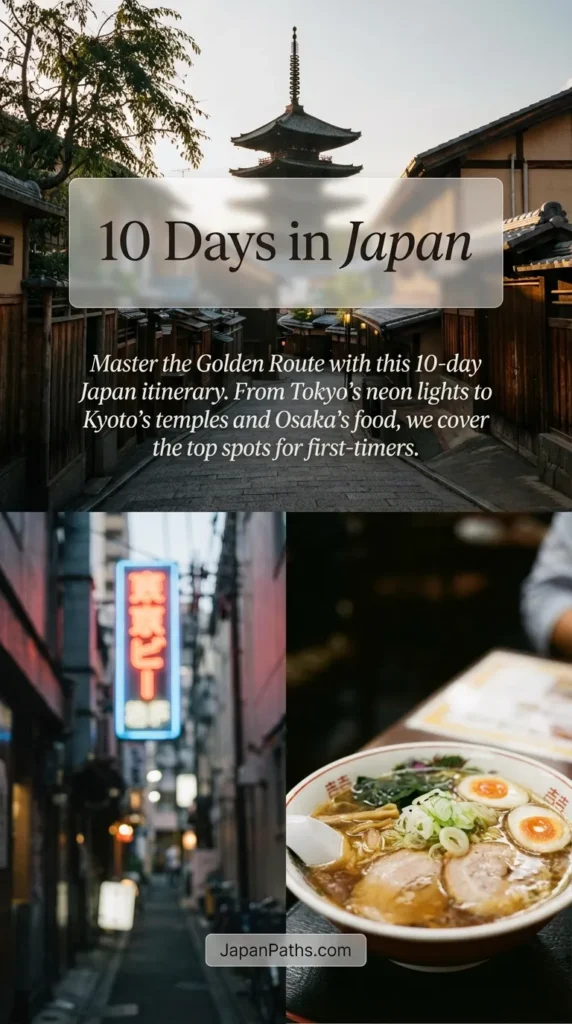
1) Day 1: Explore Shibuya and Shinjuku in Tokyo
Start your trip in two of Tokyo’s liveliest neighborhoods. These areas really show off the city’s energy and style.
Head to Shibuya in the morning. Check out the famous Shibuya Crossing, where crowds cross from all directions. For a great view, grab a seat by the window at the Starbucks above the intersection.
Take a quick walk to the Hachiko statue. It’s a popular meeting spot and a tribute to a famously loyal dog. Shibuya Station is surrounded by shops and places to eat, so you’ll have plenty to explore.
In the afternoon, hop on a train to Shinjuku. It’s only about 10 minutes away. If you need a break from the crowds, visit Shinjuku Gyoen National Garden—wide lawns and traditional gardens make it a peaceful escape.
As evening falls, roam the neon-lit streets of Shinjuku. The area is packed with tall buildings, entertainment options, and endless food choices. Walk through Kabukicho to see the bright lights and the city’s famous nightlife vibe.
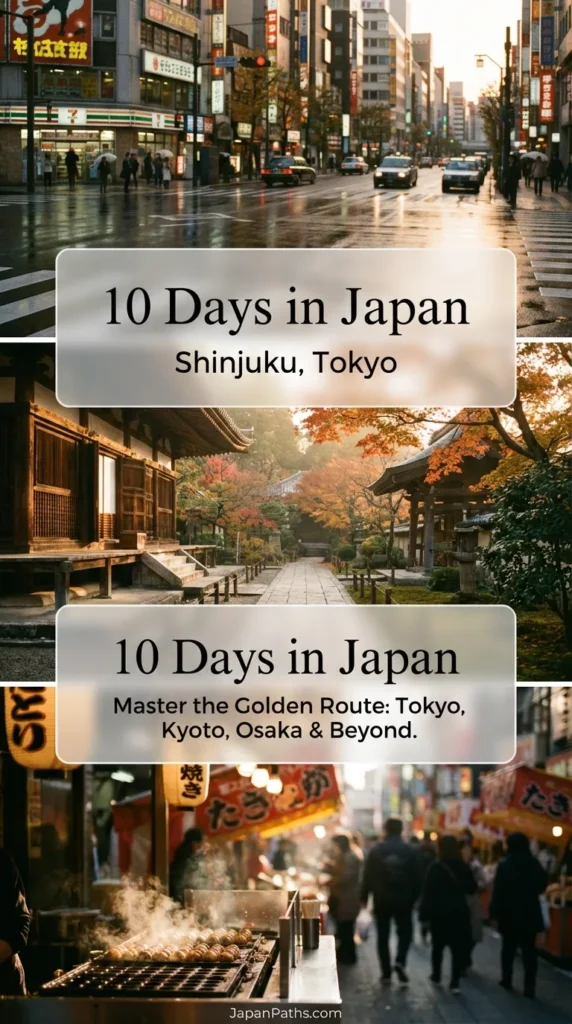
2) Day 2: Visit Asakusa, Senso-ji Temple, and Nakamise Street
Start your second day in Asakusa, where you’ll find a slice of old Tokyo. The area feels a world away from the city’s modern side.
Senso-ji Temple is the main draw here. Built in the 7th century, it’s Tokyo’s oldest Buddhist temple. Enter through Kaminarimon Gate, a huge red gate that marks the start of the temple grounds.
Walk down Nakamise Street, a lively shopping street leading to the temple. It’s about 250 meters long and filled with stalls selling traditional snacks and souvenirs. Try ningyo-yaki cakes or fresh senbei rice crackers as you wander.
The temple grounds are free to visit. Take your time exploring the main hall and the five-story pagoda. It’s busy all day, with both tourists and locals stopping by to pray or shop.
Asakusa is just three subway stops from Ueno, so you can easily add more to your day if you’re feeling energetic.
3) Day 3: Day trip to Mount Fuji and Lake Kawaguchi
Get an early start for your Mount Fuji and Lake Kawaguchi trip. You’ll get the clearest views in the morning, before clouds roll in.
Lake Kawaguchi is the easiest of the Fuji Five Lakes to reach from Tokyo. Direct buses and trains make the trip simple. The lake sits at the edge of a small resort town known for hot springs and scenic spots.
Head up to the 5th Station on Mount Fuji for closer views of the peak. Around Lake Kawaguchi, you’ll find plenty of photo ops. The north side of the lake is especially good for snapping that classic Fuji view.
Spend the day exploring the lake and nearby parks. Arakurayama Park and Oishi Park are both popular for their views. The area draws millions of visitors every year, so expect some crowds.
It’s a full-day trip from Tokyo, so you’ll get back to your hotel in the evening. Rest up before another busy day tomorrow.
4) Day 4: Explore the art and nature of Hakone
Take a day trip to Hakone, a mountain town famous for its scenery and art museums. It takes about 90 minutes from Tokyo by train.
Start at the Hakone Open-Air Museum, where sculptures sit among mountains and gardens. There’s also a Picasso collection inside for art fans.
Next, try the Hakone Loop. This circular route lets you ride cable cars, ropeways, and a boat across Lake Ashi, all with great views along the way.
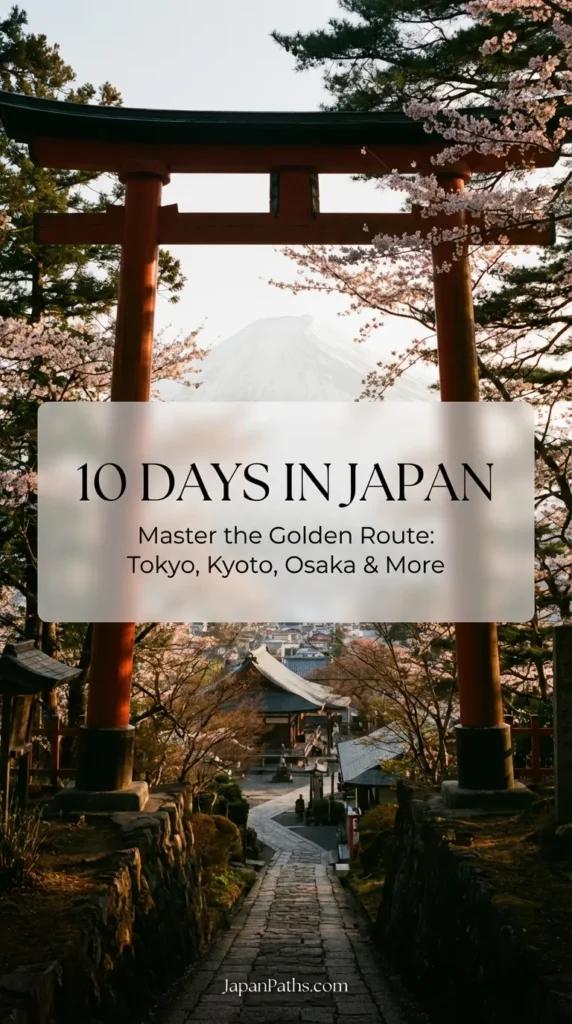
On clear days, you can spot Mount Fuji from several places. The view from Lake Ashi is especially striking. Don’t miss the red torii gate of Hakone Shrine at the water’s edge.
If you have time, dip your feet in a hot spring foot bath. After a day of exploring, it feels pretty great.
Head back to Tokyo in the evening. Trains run late, so you don’t have to rush.
5) Day 5: Travel to Nagoya and visit Nagoya Castle
On day five, travel to Nagoya, Japan’s fourth-largest city. You can reach it from Kyoto or Osaka in about an hour by shinkansen. Nagoya sits right between Tokyo and Kyoto, so it’s a convenient stop on your route.
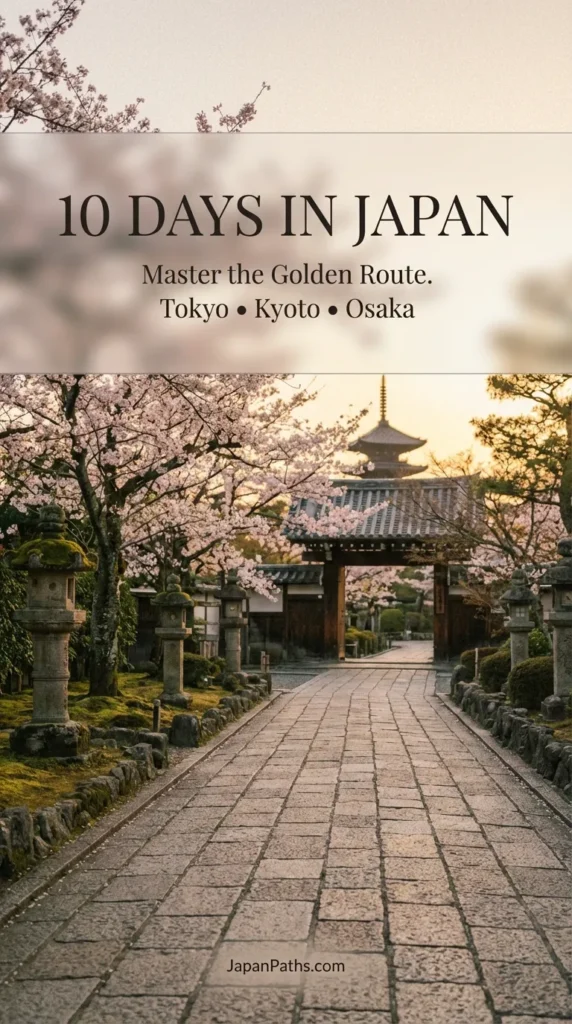
Visit Nagoya Castle, the city’s most famous historical site. Built in the early 1600s, it was home to the Owari branch of the Tokugawa family. Look for the golden shachi (dolphin-like fish) on the roof—they’re a symbol of the city.
Stroll through the castle grounds and check out the restored buildings. The park around the castle is peaceful, especially during cherry blossom season. Two to three hours here is usually enough.
If you’ve got extra time, wander over to Osu Shopping Street. It’s a fun mix of traditional shops and modern stores, showing off Nagoya’s blend of old and new.
6) Day 6: Arrive in Kyoto and visit Fushimi Inari Shrine
It’s time for Kyoto, Japan’s ancient capital. After you check in, make your way to Fushimi Inari Shrine in the south of the city.
This shrine dates back to 711 A.D. and stands out for its thousands of orange torii gates. They form tunnels all the way up the mountain—pretty unforgettable.
The main shrine sits at the base. You’ll spot fox statues everywhere; in Shinto belief, foxes are messengers of the gods. Behind the main area, trails wind up Mount Inari through the famous gates.
Walk as far as you like. The full hike to the summit and back takes about two to three hours, but even a short walk through the lower gates is beautiful.
Wear comfortable shoes since there are stairs and slopes. Bring some cash for offerings or snacks from little shops along the trail. The shrine is always open and free to enter.
7) Day 7: Explore Arashiyama Bamboo Grove and Tenryu-ji Temple
Spend your seventh day in Kyoto’s Arashiyama district, out on the city’s western edge. It’s a peaceful break from the crowds downtown.
Start at Tenryu-ji Temple, a UNESCO World Heritage Site and one of Kyoto’s key Zen temples. The gardens are especially lovely for a morning stroll.
Next, head to the Arashiyama Bamboo Grove. You’ll walk a paved path surrounded by towering bamboo. It only takes about 10-15 minutes to walk through, but you’ll want to linger.
For fewer crowds, enter the grove through Tenryu-ji’s side gate. You can easily spend a couple of hours in Arashiyama, checking out temples, the bamboo, and the riverside.
Try to visit early for the best light and quieter paths. The bamboo creates cool patterns of light and shadow on the ground.
8) Day 8: Visit Kiyomizu-dera and Gion District in Kyoto
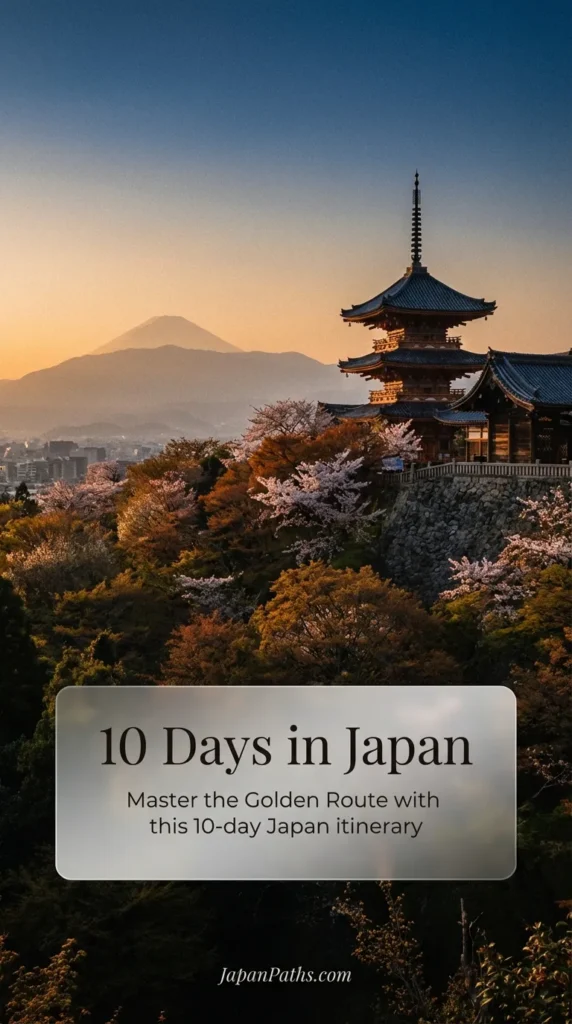
Start at Kiyomizu-dera Temple, a World Heritage Site with more than 1,200 years of history. From Kyoto Station, take bus 206 or 100 and get off at Gojozaka. The temple sits on a hillside with sweeping city views.
Give yourself an hour or two to explore. The wooden temple and its gardens show off classic Japanese architecture.
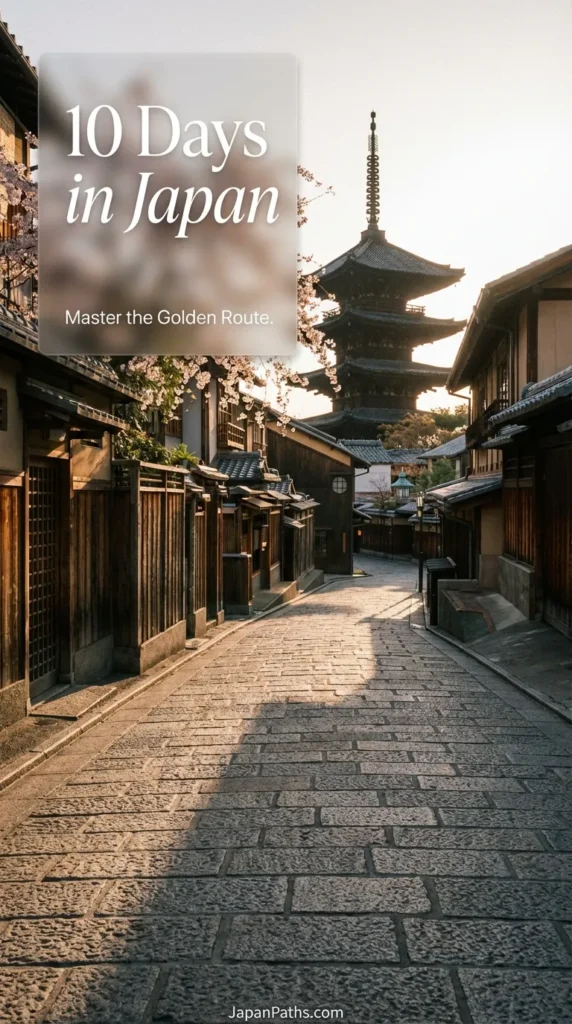
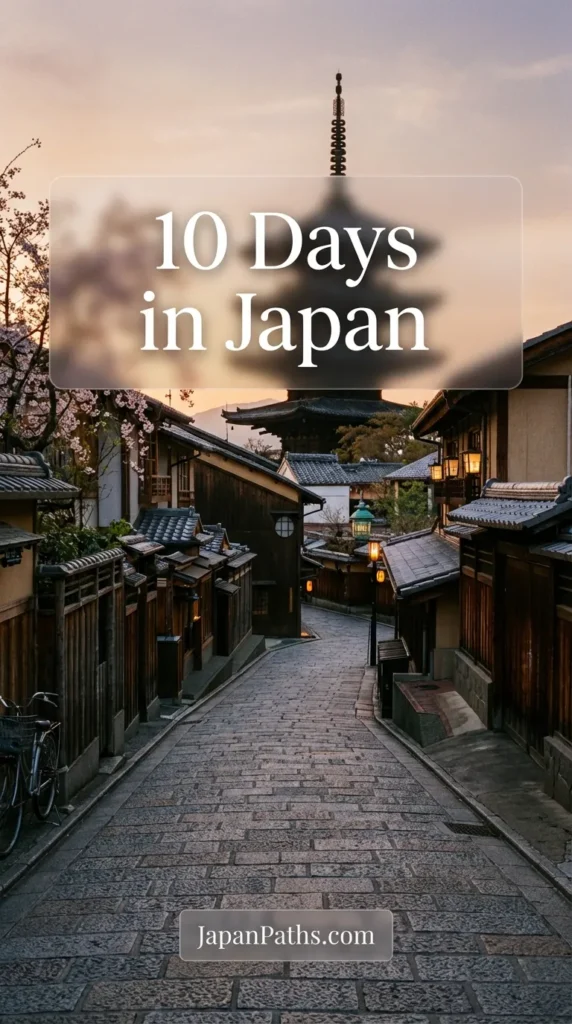
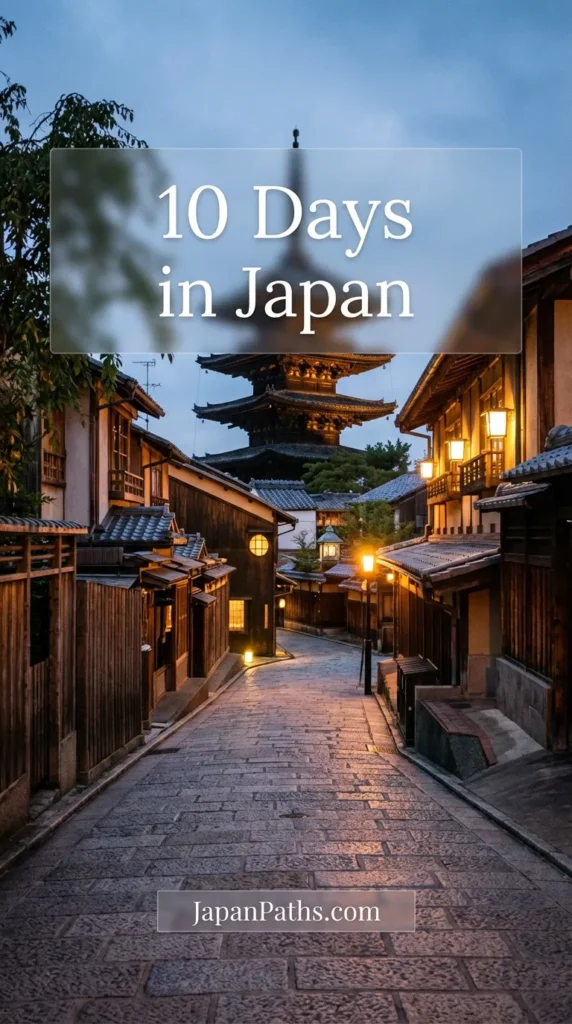
Afterwards, walk down the old streets of Ninenzaka and Sannenzaka. These sloping paths are lined with traditional shops and teahouses. From here, it’s about a 20-30 minute walk to Gion.
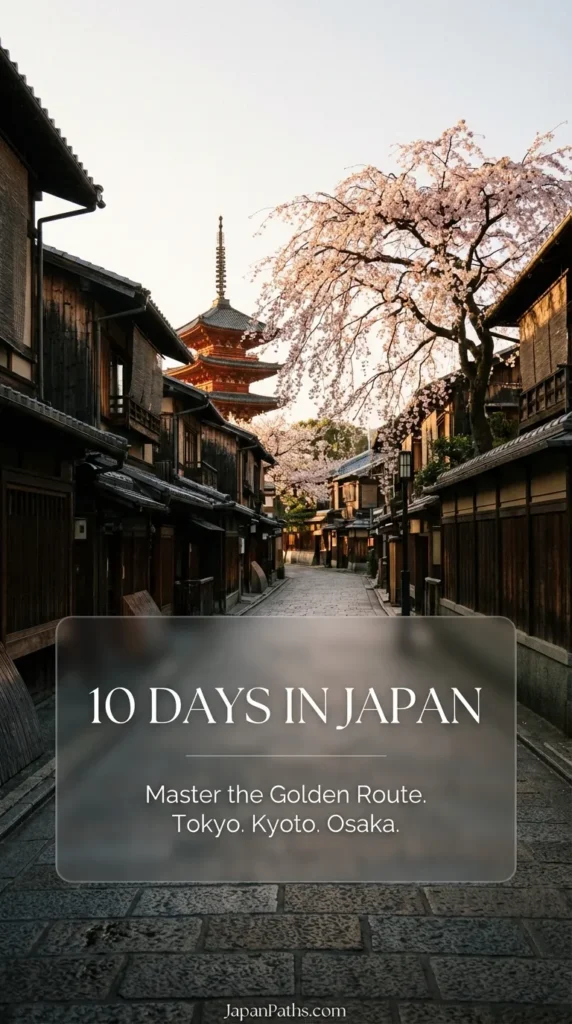
Gion is Kyoto’s famous geisha district. Along Hanamikoji Street, you’ll see traditional wooden townhouses called machiya. Don’t miss Yasaka Shrine at the edge of Gion—it’s free to enter and marked by bright orange gates.
If you’re lucky, you might spot geiko or maiko in the early evening as they head to appointments. Be respectful and don’t block their way for photos.
9) Day 9: Travel to Osaka and explore Dotonbori and Osaka Castle
On day nine, head to Osaka, Japan’s third-largest city. The train from Kyoto takes about half an hour, so it’s an easy jump.
Start at Osaka Castle, one of the city’s main landmarks. Dating back to the 1500s, the castle offers panoramic views from the top floor. Wander the grounds and learn a bit about its place in Japanese history. The park around the castle is also worth a stroll.
In the afternoon, dive into Dotonbori, Osaka’s most vibrant district. Neon lights, giant signs, and endless food stalls make it feel like a festival every night. The riverside adds to the lively scene.
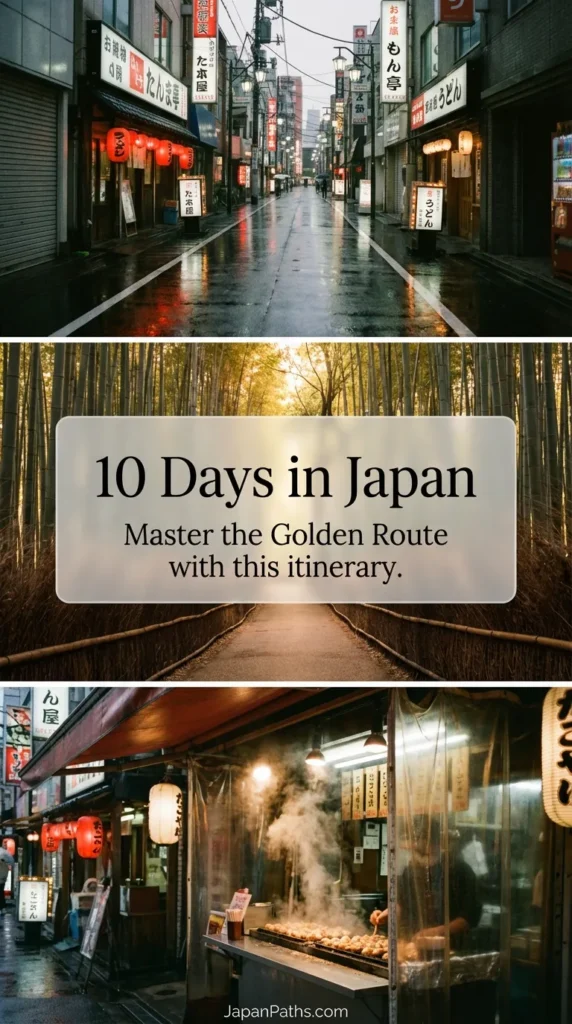
Try street food like takoyaki and okonomiyaki—Osaka’s specialties. The shopping doesn’t stop until late, and the area buzzes after dark. Snap a photo with the Glico Running Man sign and the famous crab restaurant. This is the Osaka you’ve heard about—fun, loud, and full of flavor.
10) Day 10: Enjoy Universal Studios Japan and Nintendo World in Osaka
Wrap up your trip with a day at Universal Studios Japan in Osaka. It’s one of the world’s top theme parks, packed with rides and themed zones.
Super Nintendo World is a must—suddenly, you’re inside a video game. Try the Mario Kart ride and other interactive activities. The Harry Potter World area is also a big draw, with its detailed Hogwarts and Hogsmeade streets.
Arrive early to beat the crowds. Express passes help you skip the longest lines. The park also has Minion Park, Jaws, and more to explore.
Plan to spend the whole day. Wear comfortable shoes and check wait times with the park’s app as you go. There are plenty of food choices, from Japanese meals to classic theme park snacks.
Essential Travel Tips for Japan’s Golden Route
Getting the most out of the Golden Route means figuring out Japan’s speedy but sometimes confusing trains, learning the local customs (which can feel pretty different from home), and balancing your budget in a country where you can splurge or save—sometimes in the same day.
Navigating Transportation Efficiently
The JR Pass is probably the most important thing you’ll buy for the Golden Route. This rail pass costs about $280-$400 for 7 days and pays for itself after just one round trip between Tokyo and Kyoto on the Shinkansen bullet train.
Buy it before you get to Japan. Don’t wait until you arrive—seriously, it’s a hassle if you forget.
IC cards like Suica or Pasmo make local travel a breeze. Just load them with yen and tap at train gates, buses, and even convenience stores.
They work in all Golden Route cities. Super handy, honestly.
Download these apps before you arrive:
- Google Maps (Japan transit works surprisingly well)
- Hyperdia (for detailed train schedules)
- Japan Travel by NAVITIME (offline maps are a lifesaver)
Most train stations have English signs, but knowing a bit about navigation makes life easier. Exits are numbered, so jot down which exit you’ll need for your destination.
Rush hour is 7:30-9:30 AM and 5:30-7:30 PM. If you’ve got luggage, avoid those times if you can.
Reserve seats on busy Shinkansen routes during weekends or holidays. Unreserved cars on the Tokyo-Kyoto line fill up fast.
Understanding Japanese Etiquette
Take off your shoes when entering homes, traditional restaurants, temples, and some accommodations. Look for shoe racks at the entrance or just copy what others do—it’s usually obvious.
Talking on your phone during train rides is considered rude. Keep conversations quiet and switch your phone to silent mode.
Eating while walking isn’t really done in most places. People might stare if you try.
Key etiquette rules:
- Bow a little when thanking someone
- No tipping at restaurants or hotels
- Stand on the left side of escalators (right in Osaka, just to keep you on your toes)
- Point with your whole hand, not a finger
- Never stick chopsticks upright in rice
Cash is still king at smaller restaurants and shops. Use the little tray at the register to hand over money, not your hand.
Photography is fine at most tourist spots, but always check for signs—temples and museums sometimes ban photos.
Budgeting and Currency Insights
Plan for about $100-150 per person daily for mid-range travel. That covers your hotel, food, local transport, and entrance fees.
Daily cost breakdown:
- Budget hotel: $50-80
- Meals: $30-40 (breakfast $5-8, lunch $8-15, dinner $15-25)
- Activities and entrance fees: $10-20
- Local transport: $10-15
ATMs at 7-Eleven stores and post offices accept foreign cards without fuss. Japanese ATMs often close at night, so grab cash during business hours.
Banks charge $3-5 per withdrawal. Not ideal, but that’s the reality.
Credit cards work at major hotels, department stores, and chain restaurants. Smaller places usually want cash. Carry at least 10,000-20,000 yen ($70-140) in cash every day, just in case.
Tap water is safe and free at restaurants. Convenience store meals cost $4-8 and are surprisingly good.
Standing sushi bars and ramen shops give you authentic food at lower prices compared to sit-down restaurants.
Temple and shrine entrances usually cost $3-5. Gardens and castles range from $5-10, and museums average $8-12 per person.
Maximizing Your Cultural Experience
Understanding Japanese customs and timing your visit around cultural events will deepen your connection to the country. Even small changes in how you act or what you eat can turn basic tourism into a real cultural exchange.
Seasonal Events and Festivals
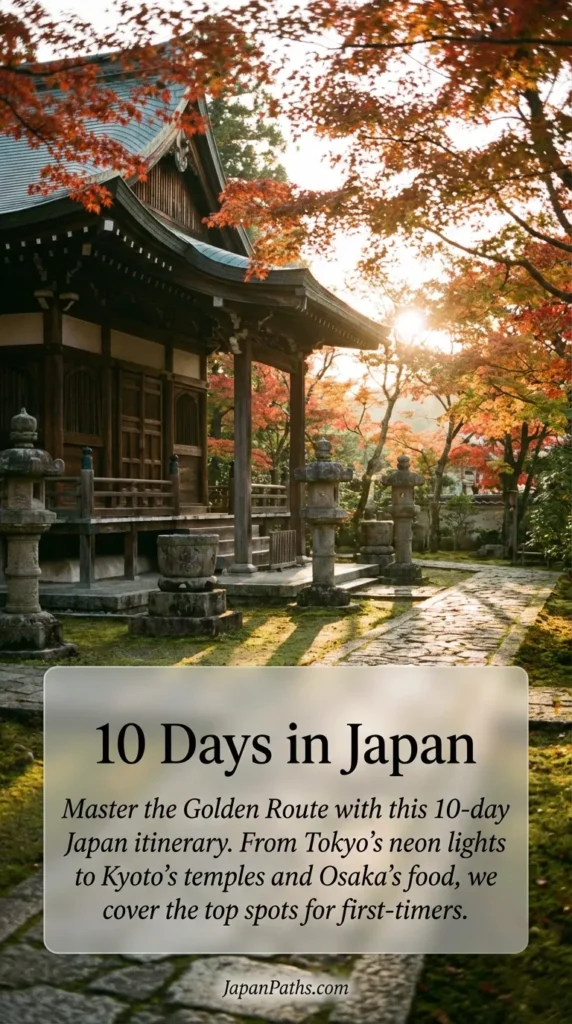
February through early March brings plum blossom viewing at temples and gardens across Tokyo and Kyoto. Late March to early April is cherry blossom season, when locals gather for hanami parties under blooming sakura trees in parks like Ueno and Maruyama.
Summer festivals run from July through August. Neighborhoods hold bon odori dance festivals, and Kyoto’s Gion Matsuri in mid-July is massive.
These events have food stalls, traditional music, and locals wearing yukata (casual summer kimono). Fall means autumn leaf viewing from late October through November, especially in Kyoto’s temple gardens.
Winter illuminations light up shopping districts and parks from late November through February. Check local event calendars before your trip—plenty of small festivals pop up throughout the year.
Dining Etiquette and Local Cuisine
Take off your shoes when you enter tatami-mat restaurants. Rest your chopsticks on the hashioki (chopstick rest) between bites, and never stick them upright in rice.
Slurping noodles is not just okay—it shows you’re enjoying your meal. Say “itadakimasu” before eating and “gochisousama deshita” after finishing.
Pour drinks for others at your table instead of serving yourself. It’s a nice touch, honestly.
Must-try dishes include:
- Ramen in Tokyo’s specialty shops
- Kaiseki (multi-course) meals in Kyoto
- Okonomiyaki in Osaka
- Fresh sushi at Tsukiji Outer Market
Many restaurants show off plastic food models in the window. If you can’t read the menu, just point to what you want.
Tipping isn’t a thing and can confuse people. Pay at the cashier near the entrance, not at your table.
Frequently Asked Questions
The Golden Route covers Tokyo, Hakone, Mount Fuji, Nagoya, Kyoto, and Osaka. You’ll need a Japan Rail Pass for efficient travel between cities.
Most travelers spend 3-4 days in Tokyo, 3-4 days in Kyoto, and shorter stays in the other spots. Adjust your timing if you want to catch seasonal festivals like cherry blossoms in late March or fall foliage in November.
What are the must-visit cities for a 10-day trip in Japan?
Start in Tokyo and give yourself 3-4 days to explore neighborhoods like Shibuya, Shinjuku, and Asakusa. The city mixes modern tech with ancient temples and gives a solid intro to Japan.
Kyoto needs 3-4 days for its temples, geisha districts, and cultural landmarks. It’s packed with shrines and classic Japanese architecture.
Osaka is a great final stop for 1-2 days, famous for its food and laid-back vibe. Consider a day trip to Nara for the deer park and Todai-ji Temple.
Hakone and Mount Fuji together need 1-2 days for nature, hot springs, and mountain views. Nagoya works as a stopover between Tokyo and Kyoto—half a day at Nagoya Castle is enough.
How can I experience both modern and traditional Japanese culture along the Golden Route?
Modern Japan pops in Tokyo’s Shibuya, Akihabara, and Harajuku—think tech, gaming, and wild fashion. Check out teamLab Borderless or Tokyo Skytree for digital art and city views.
Traditional culture is everywhere in Kyoto’s temples, tea houses, and geisha districts like Gion. Try a tea ceremony, rent a kimono, or catch a geisha performance in the evening.
Asakusa in Tokyo blends both worlds with Senso-ji Temple surrounded by modern shops. Nakamise shopping street sells classic crafts right next to new souvenirs.
Hakone offers ryokan stays with tatami floors and kaiseki meals. Many include onsen (hot spring) access, which is about as authentic as it gets.
What is the recommended amount of time to spend in each major stop on the Golden Route itinerary?
Tokyo needs 3-4 days to hit the main neighborhoods and attractions. Plan at least one day each for Shibuya/Shinjuku, Asakusa, and a day trip to Mount Fuji or nearby spots.
Kyoto also needs 3-4 days because there’s just so much—Fushimi Inari Shrine, Kinkaku-ji, Arashiyama Bamboo Grove, and Gion are all worth your time.
Hakone works best as a one-day stop or overnight between Tokyo and Kyoto. That gives you time for the ropeway, Lake Ashi, and the Open-Air Museum.
Osaka is good for 1-2 days at the end of your trip, mainly for food and Osaka Castle. Nara is an easy half-day or full-day trip from either Osaka or Kyoto.
Nagoya is a stopover—spend 3-4 hours at Nagoya Castle, then move on. It’s convenient if you’re riding the Shinkansen between Tokyo and Kyoto.
Are there any specific local festivals or seasonal events to consider when planning a 10-day trip to Japan?
Cherry blossom season (late March to early April) draws big crowds. Book hotels early and expect higher prices, but the scenery is worth it.
Fall foliage (mid-November to early December) makes Kyoto’s temple gardens stunning, and sightseeing weather is usually comfortable.
Summer festivals happen in July and August, with fireworks and traditional matsuri. It’s hot and humid, but you’ll see locals in yukata and plenty of celebrations.
New Year (December 31 to January 3) closes lots of businesses and packs out temples. Trains run on different schedules, but you can experience hatsumode (first shrine visit) traditions.
Golden Week (late April to early May) is the busiest travel period. Hotels fill up, prices jump, and crowds are intense—avoid it if you can.
What are the best transportation options for traveling between cities on the Golden Route?
The Japan Rail Pass gives you unlimited rides on most JR trains for 7, 14, or 21 consecutive days. A 7-day pass costs about 29,650 yen and pays for itself after a single Tokyo-Kyoto round trip.
The Shinkansen bullet train connects Tokyo, Nagoya, Kyoto, and Osaka in 2-3 hours. These trains run often and offer both reserved and non-reserved seats.
Local trains and subways in each city use IC cards like Suica or Pasmo. You can use these cards across most of Japan’s public transport.
Buses are best for getting to Mount Fuji, Lake Kawaguchi, and some Hakone spots not reached by train. The Hakone Free Pass covers buses, cable cars, and boats in the area.
Walking is honestly the best way to explore neighborhoods and temple areas. Many attractions in Kyoto and Tokyo are close together in each district.
Can you suggest some unique culinary experiences to try while on the Golden Route in Japan?
Tsukiji Outer Market in Tokyo is a classic spot for fresh sushi at breakfast. Wander the narrow lanes and you’ll spot vendors serving up grilled seafood, tamagoyaki (that fluffy Japanese omelet), and whatever seasonal treats happen to be in stock.
Osaka’s Dotonbori district is the place for takoyaki (those addictive octopus balls) and okonomiyaki, which are savory pancakes you really shouldn’t skip. At night, the whole area buzzes with neon signs and the smell of street food—restaurants and stalls everywhere, each trying to outdo the next.
In Kyoto, kaiseki restaurants take dining to another level. These spots serve multi-course meals that change with the seasons, showing off the kind of culinary artistry Japan’s famous for.
Ramen shops pop up all along your route, and honestly, each one has its own twist. Tokyo’s shoyu (soy sauce) ramen stands out, but there’s always something new to slurp.