
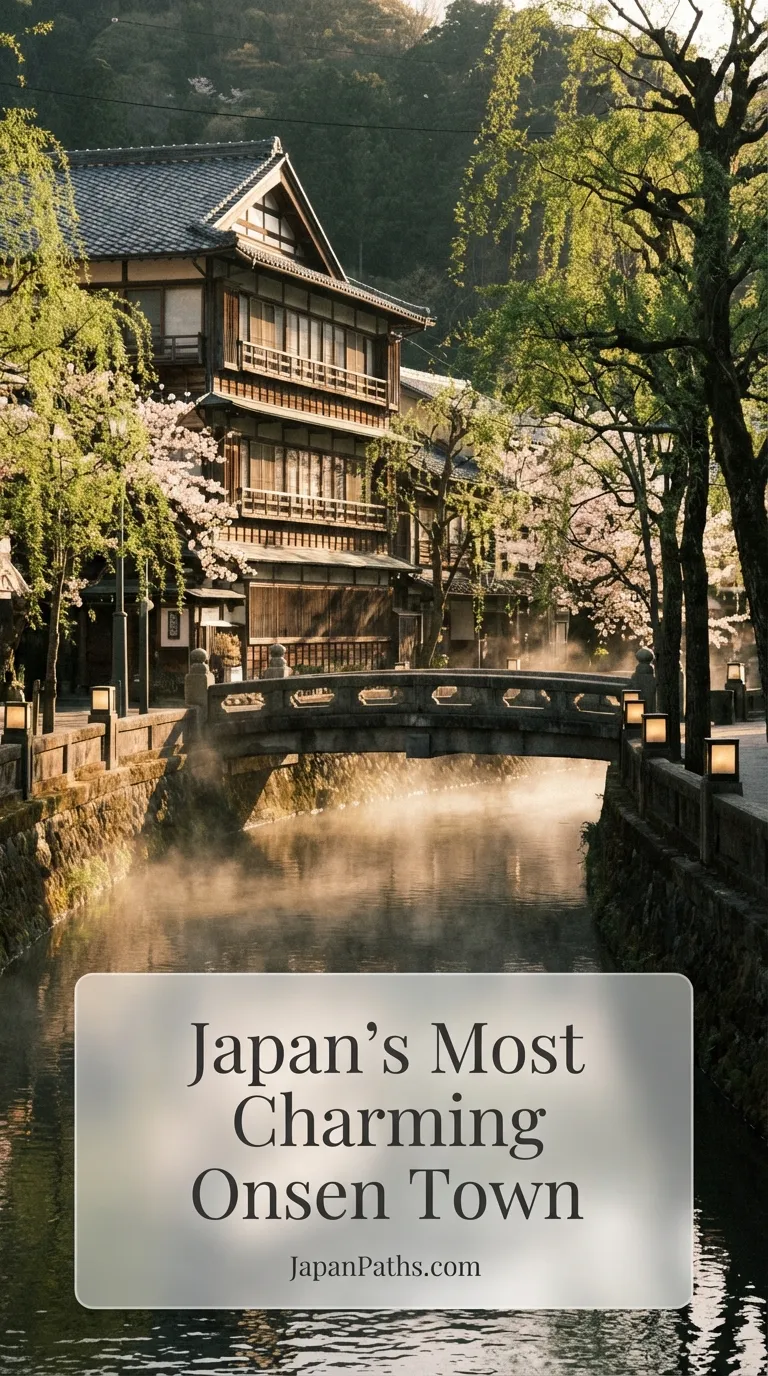
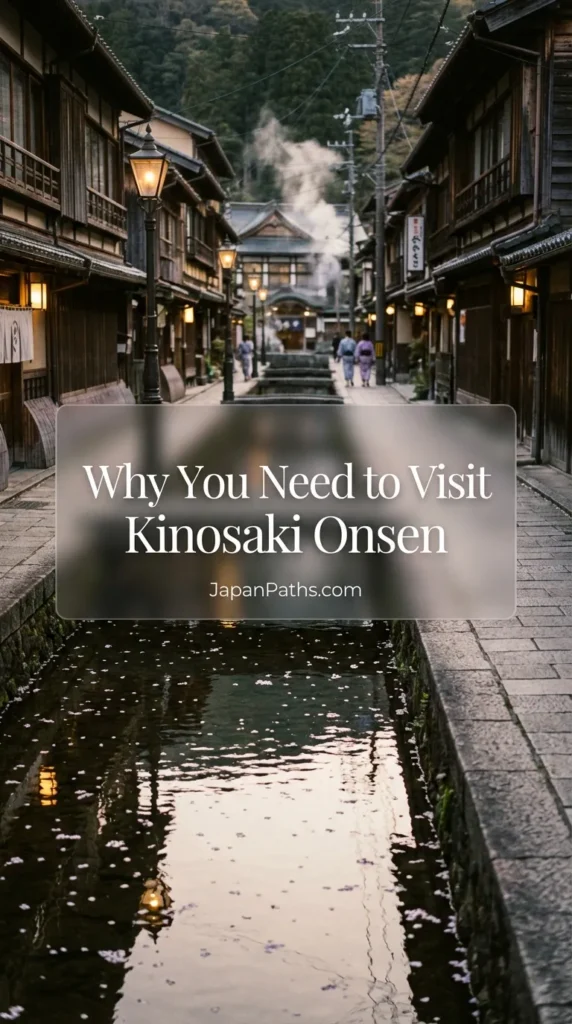
Kinosaki Onsen is a historic hot spring town tucked away in northern Hyogo Prefecture. For over 1,300 years, it’s welcomed travelers seeking relaxation and a taste of old Japan.
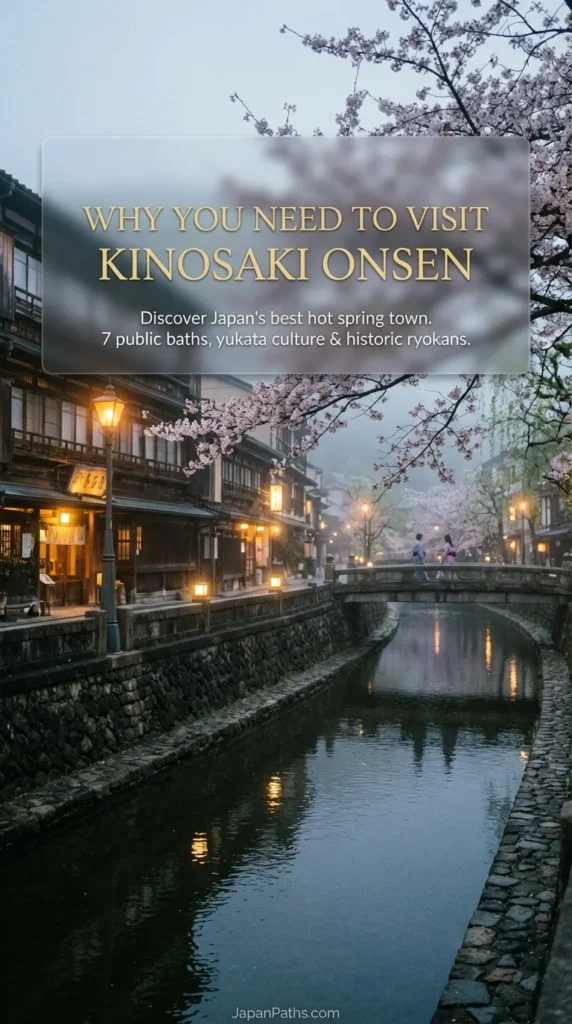
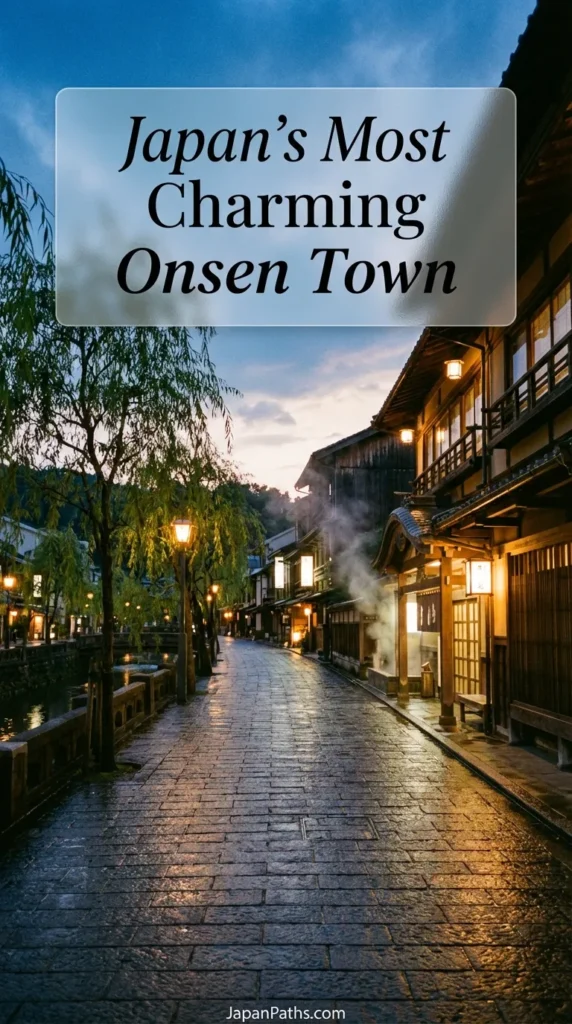
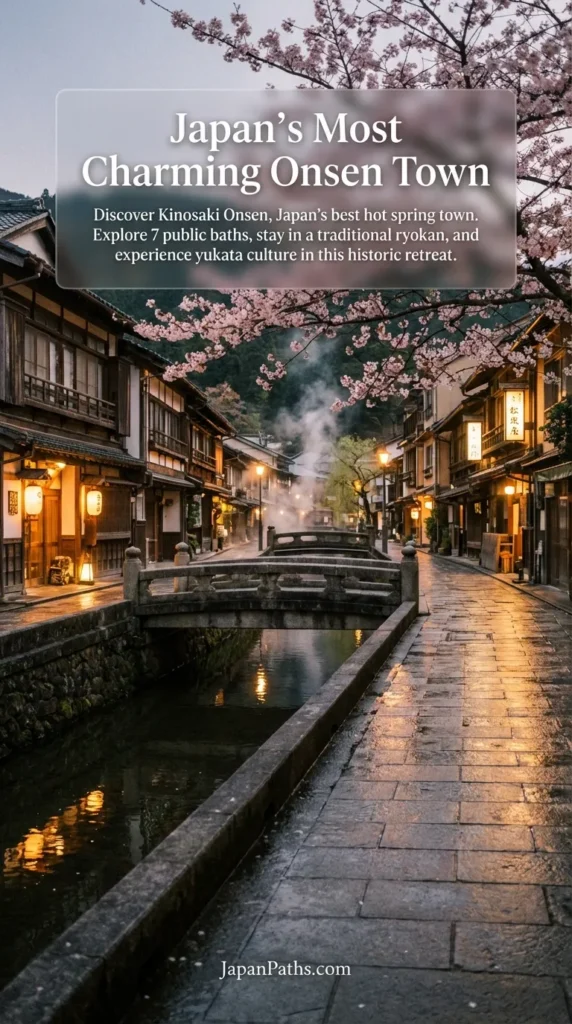
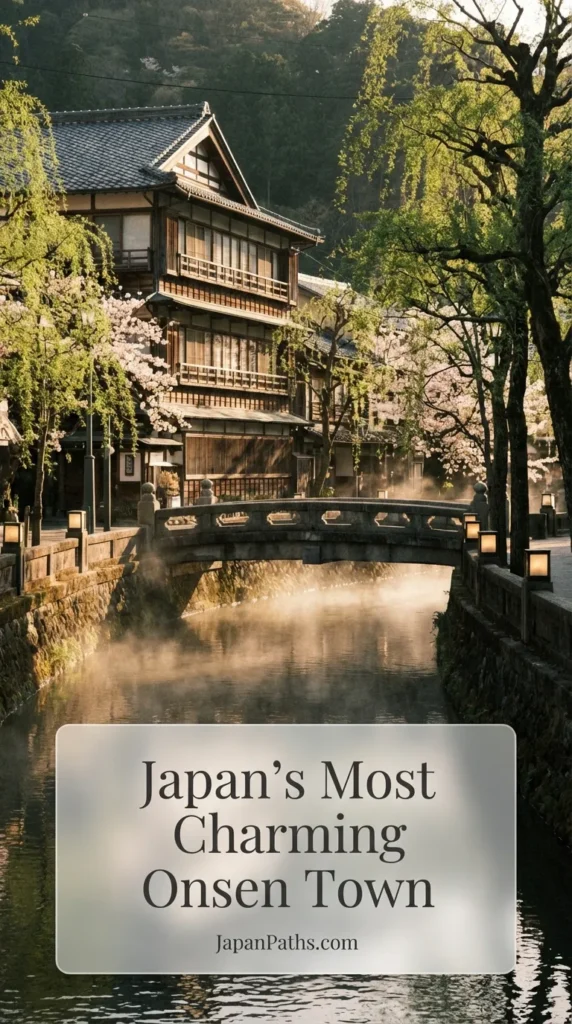
The town sits along a willow-lined river, with traditional wooden buildings that earned it a spot in the Michelin Green Guide Japan. What makes Kinosaki special is how it keeps Japanese culture alive while still feeling friendly to modern visitors.
This guide covers everything you need to know about visiting Kinosaki Onsen, from the seven public bathhouses you can explore to the best places to stay and the cultural experiences that make this town unique.
I’ll walk you through specific onsen facilities, cultural sites, and practical info for planning your trip. You’ll also get a feel for the history and traditions that shaped Kinosaki into one of Japan’s most beloved hot spring destinations.
1. Goshonoyu Onsen
Goshonoyu Onsen stands out among Kinosaki’s seven public bathhouses thanks to its striking design. The building draws inspiration from the Kyoto Imperial Palace, and you can really feel that grandeur when you step inside.
The main draw here is the outdoor bath. I sat in the open-air tub, listening to the nearby waterfall, and felt a sense of calm settle in.
The indoor baths are roomy and spotless. Even with the traditional look, everything works well and feels up to date.
This place gets busy, especially in the evenings. I found early mornings or late afternoons much quieter.
The water temperature was just right—not too hot, which I appreciated. Goshonoyu manages to balance historic charm with modern comfort, which isn’t always easy.
Rating: 4.3 (2,878 reviews)
Location: 448 Kinosakicho Yushima, Toyooka, Hyogo 669-6101, Japan
Contact: +81 796-32-2230
Website: Visit Website
2. Kinosaki Onsen Sensui
I stayed at Kinosaki Onsen Sensui and found it a solid pick for anyone wanting a traditional inn experience. It sits right in the middle of town, so all seven public bathhouses are just a stroll away.
The rooms are simple and clean—no fuss, no unnecessary frills. I liked that because it kept the focus on the hot springs themselves.
The staff were friendly and quick to help with questions or dinner reservations. They really seemed to care about making guests comfortable.
Dinner was a highlight. I watched the chef work right in front of me, which made the meal feel special.
Portions were generous, and everything tasted fresh. They’ve also got a sauna and their own bathhouse, which I tried before heading out to the public baths.
They’re attentive about dietary needs and special occasions, which is nice. I also noticed good COVID-19 safety practices, which helped me relax.
The whole place feels calm, just what I want from a hot spring inn. It’s not flashy, but it nails the essentials.
Rating: 4.6 (507 reviews)
Location: 753 Kinosakicho Yushima, Toyooka, Hyogo 669-6101, Japan
Contact: +81 796-32-3355
Website: Visit Website
3. Nishimuraya Honkan
Staying at Nishimuraya Honkan felt like stepping into another era. This inn has welcomed guests since 1859, making it one of the oldest in Kinosaki.
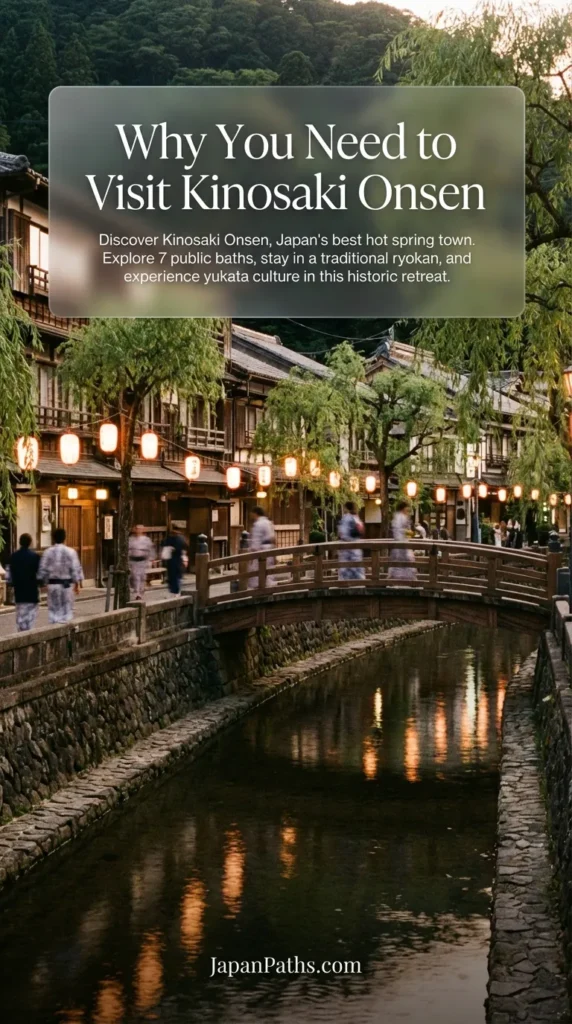
It’s right in the heart of town, along the willow-lined Otani River. Stone bridges cross the water, and the whole setting feels timeless.
My room looked out over a carefully kept Japanese garden. The view changes with the seasons—cherry blossoms, autumn leaves, or fresh snow, depending on when you visit.
The design is classic Japanese, peaceful and never rushed. It’s not flashy, but the details matter.
There are three different indoor baths, each with its own feel. The natural hot spring water has a soft texture, thanks to the chloride springs in the area.
Meals use ingredients from Tajima, and you can tell the recipes have been handed down for generations. The food here stands out even by Kinosaki standards.
Since 2024, only guests aged 10 and up can stay. If you book directly on their site, it’s usually cheaper than using an outside platform.
They also have a separate building, Hirata-kan, designed by Masaya Hirata and now registered as a cultural property. That’s a neat detail for architecture fans.
Rating: 4.6 (702 reviews)
Location: 469 Kinosakicho Yushima, Toyooka, Hyogo 669-6101, Japan
Contact: +81 796-32-2211
Website: Visit Website
4. Onsenji
Onsenji sits on a hill above Kinosaki Onsen. This Buddhist temple has watched over the hot springs for more than 1,300 years.
Legend says the founding monk discovered the thermal waters that made Kinosaki famous. I took the cable car up—it’s about a seven-minute ride with nice views of the town and the mountains.
If you’re up for it, you can hike instead, but it’s steep and takes around 20 minutes. The temple is small but well cared for.
I walked through the main hall and saw people praying, leaving offerings. The grounds are peaceful, full of old trees and stone lanterns.
From the viewing area, you can see the whole town below, steam curling up from the bathhouses. It’s a great spot for photos.
The temple feels essential to Kinosaki’s story. Without these hot springs, the town just wouldn’t exist.
Most people skip this place, but honestly, it’s worth the trip up. There’s something special about seeing the town from above.
Rating: 4.1 (453 reviews)
Location: 985-2 Kinosakicho Yushima, Toyooka, Hyogo 669-6101, Japan
Contact: +81 796-32-2669
Website: Visit Website
5. Kinosaki Onsen Tourism Association
The Kinosaki Onsen Tourism Association is the main info center for visitors. I stopped by their office on Yushima Street when I arrived, and the staff explained the town’s unique bath-hopping system.
They offer maps, guides, and straightforward advice about visiting the seven public baths. The staff helped me with travel questions and even suggested restaurants and shops.
I appreciated their English-language resources. It made navigating the town a lot easier.
What sets this place apart is the staff’s deep knowledge of Kinosaki’s 1,300-year bathing traditions. They described how the whole town works like a giant ryokan—guests stay at different inns but share the bathhouses and facilities.
They also pointed out the best times to visit each bathhouse to dodge crowds. The office is close to Kinosaki Onsen Station, so it’s a smart first stop.
I picked up a detailed map showing all the public baths, dining spots, and walking routes. They also had info on seasonal events and when the willow trees look their best.
Rating: 4.1 (2,076 reviews)
Location: 78 Kinosakicho Yushima, Toyooka, Hyogo 669-6101, Japan
Website: Visit Website
6. 城崎温泉駅
The train station is the main gateway to Kinosaki Onsen. I arrived here and immediately noticed the traditional look—it really sets the mood for the town.
The building mixes classic design with modern touches. Inside, I found tourist info and luggage storage, and the staff answered my questions about getting around.
The station is small and easy to navigate. From the platform, the main street is just a short walk away, which makes arrival pretty painless.
Benches and waiting areas give you a place to pause before heading into town. The station handles local trains that connect Kinosaki Onsen to bigger cities nearby.
Rating: 4.2 (102 reviews)
Location: Kinosakicho Yushima, Toyooka, Hyogo 669-6101, Japan
7. Kounoyu Onsen
Kounoyu Onsen stands out among Kinosaki’s seven public baths for its peaceful outdoor soaking area. I found the open-air pool especially relaxing, with clear mountain views that made me feel more connected to nature.
The traditional Japanese garden around the bath adds a calm atmosphere. The bathhouse has a simple design, blending in nicely with the town’s classic style.
The water temperature felt just right. I liked how the outdoor setting let me soak while looking out at the scenery.
When I visited, it wasn’t crowded, so I could easily find a good spot. The facility looked clean and well-kept.
If you’re staying at a local ryokan and have a bath pass, you can visit Kounoyu. I suggest going in the late afternoon when the natural light really brings out those mountain views.
The location is easy to reach by foot from the rest of the onsen district. It’s a solid pick if you want a quieter bath compared to the busier places in town.
Rating: 4.1 (2,712 reviews)
Location: 610 Kinosakicho Yushima, Toyooka, Hyogo 669-6101, Japan
Contact: +81 796-32-2195
Website: Visit Website
8. Ichinoyu Onsen
Ichinoyu Onsen holds a special spot in Kinosaki’s history. A doctor from the Edo period, Kagawa Shutoku, once called it the “best hot spring under heaven.”
The building really stands out with its tall roof, acting as a landmark for the whole town. The main attraction is the cave-style bath.
Walking in, I felt like I’d entered a natural grotto, with rock walls wrapping around the steaming water. The baths offer both indoor and outdoor options, so you get to choose your soak.
The cave design makes the experience feel different from the other public baths in town. I paid 800 yen for entry as an adult.
The facility opens early at 7:00 AM and stays open until 11:00 PM. Last entry is at 10:30 PM.
It closes on Wednesdays unless that’s a holiday. Sometimes the schedule changes, so it’s worth checking ahead.
The baths get busy during peak evening hours. I found mornings quieter and much more relaxing.
The water temperature runs hot, like most onsen in Japan. Take your time getting in—no need to rush.
Rating: 4 (1,744 reviews)
Location: 415-1 Kinosakicho Yushima, Toyooka, Hyogo 669-6101, Japan
Contact: +81 796-32-2229
Website: Visit Website
9. Nishimuraya Hotel Shogetsutei
Nishimuraya Hotel Shogetsutei feels like one of the most established places to stay in Kinosaki Onsen. The hotel sits on a huge garden—over 160,000 square meters of forested land.
This gives it a quiet, peaceful setting away from the busy town center. The property has run for over 160 years as part of the historic Nishimuraya family of inns.
I appreciated how the hotel mixes traditional Japanese design with modern resort features. You can pick from standard Japanese rooms, Western-style rooms, or special rooms with private outdoor baths.
The onsen facilities include both men’s and women’s baths, each with four different bathing options. Each side has a large indoor bath, an outdoor bath, a cold water bath, and a dry sauna.
Private rental baths are available if you want more privacy. The spa and relaxation areas offer extra services, including massage treatments.
For meals, they serve traditional kaiseki cuisine with local Tajima ingredients and seasonal seafood. During crab season, they make special crab dishes.
Dining options include in-room meals and a restaurant called Ricca. In summer, guests can use the outdoor pool in the garden.
Rating: 4.5 (1,658 reviews)
Location: Japan, 〒669-6101 Hyogo, Toyooka, Kinosakicho Yushima, 1016-2 3F
Contact: +81 796-32-4895
Website: Visit Website
10. Oedo Onsen Monogatari Kinosaki
This hotel sits on the outskirts of Kinosaki and offers a solid budget-friendly option. It’s a bit outside the main area, which means you get more space and quieter surroundings.
The main draw is the natural hot spring bathhouse right on site. I loved not having to walk into town after a long day to enjoy the baths.
The rooms are simple and clean. Nothing fancy, but they had everything I needed for a comfortable stay.
Meals are included in the room rate, which was a big plus. The restaurant serves buffet-style Japanese and Western food, and the selection changes, so I got to try different things each day.
The staff helped me out with directions and local info. If you want to visit the public bathhouses and main street, it’s about a 15-minute walk from here.
I actually liked returning to this quiet base after exploring the busier parts of Kinosaki. It felt like a little escape.
Rating: 3.9 (2,128 reviews)
Location: 1232 Kinosakicho Momoshima, Toyooka, Hyogo 669-6102, Japan
Contact: +81 50-3615-3456
Website: Visit Website
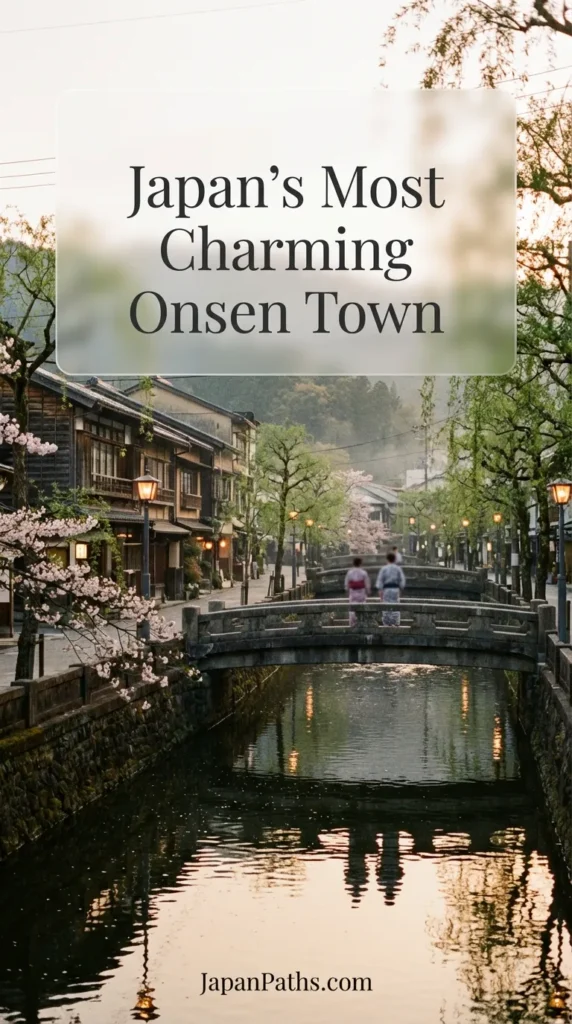
The History And Unique Culture Of Kinosaki Onsen
Kinosaki Onsen’s 1,300-year legacy centers on healing hot springs and a unique bathhouse culture. Visitors tour seven public baths while wearing traditional yukata.
The town’s customs and festivals reflect centuries of welcoming travelers seeking rest and recovery. Hot springs were discovered in Kinosaki around the 8th century.
Origins As A Healing Retreat
According to local legend, a stork injured its leg and healed itself by bathing in the thermal waters. This story gave rise to the town’s reputation as a place of healing.
The town developed slowly over centuries into an onsen destination. By the medieval period, word had spread about the therapeutic benefits of Kinosaki’s mineral-rich waters.
Travelers began visiting to ease joint pain, improve circulation, and recover from injuries. Kinosaki’s spot in northern Hyogo Prefecture along the Sea of Japan kept it a bit isolated, which helped preserve its traditional character.
I like that Kinosaki stayed focused on wellness instead of becoming too commercial, unlike some other hot spring towns. Kinosaki hosts several festivals throughout the year that reflect its long history.
Local Festivals And Traditions
The town’s connection to hot springs influences many of these celebrations. Locals take pride in keeping customs alive and passing them down through generations.
Onsen hopping really defines Kinosaki’s unique culture. Visitors buy a pass to access all seven public bathhouses.
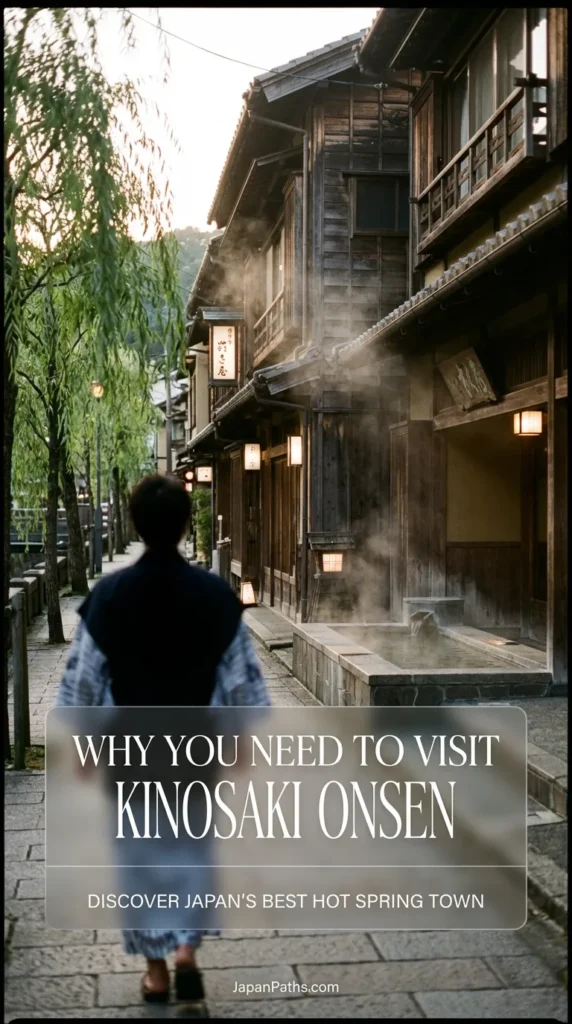
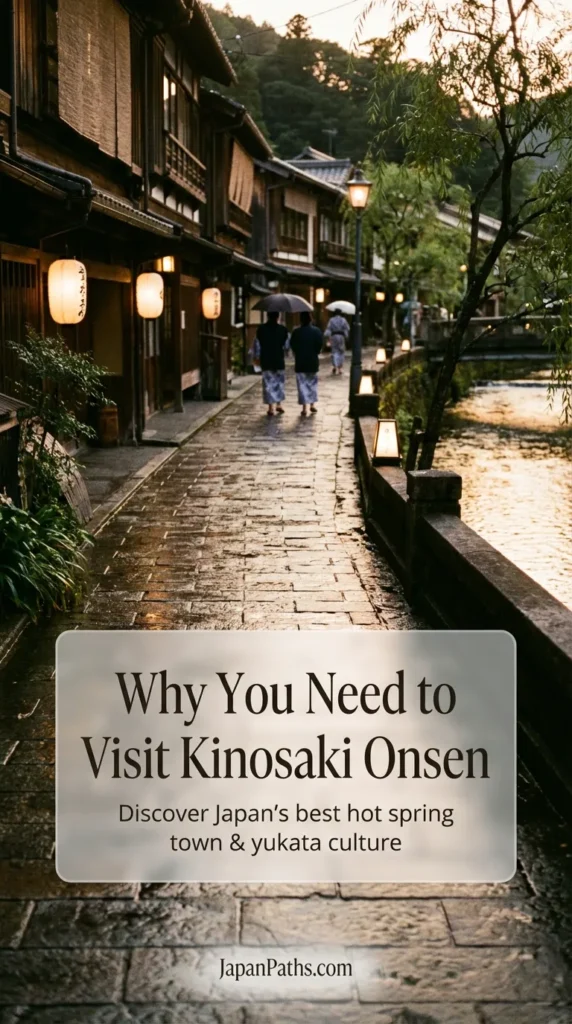
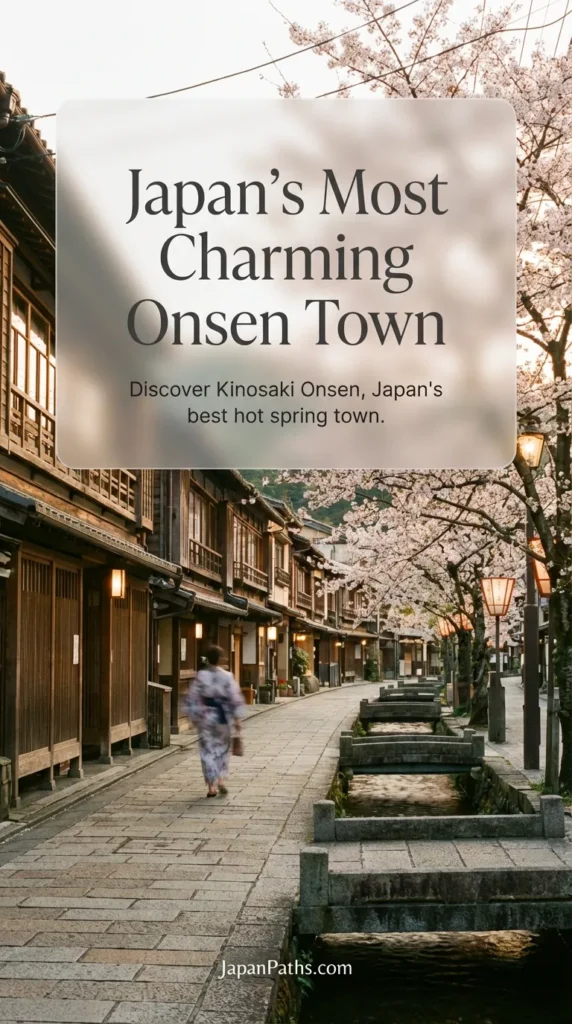
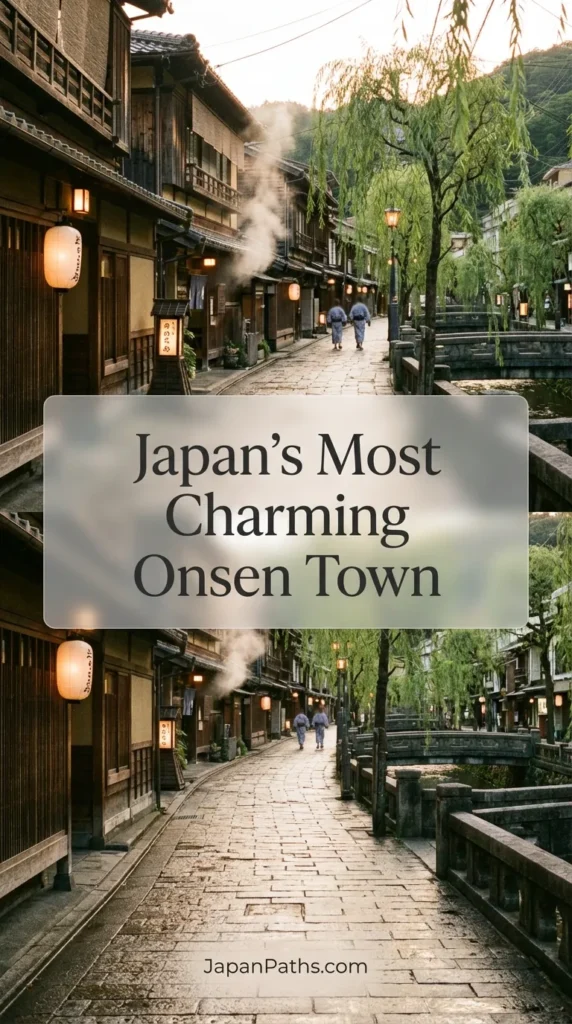
Guests wear yukata (casual cotton kimono) and geta (wooden sandals) while walking between baths. This creates a shared experience—almost like the whole town turns into one big, traditional inn.
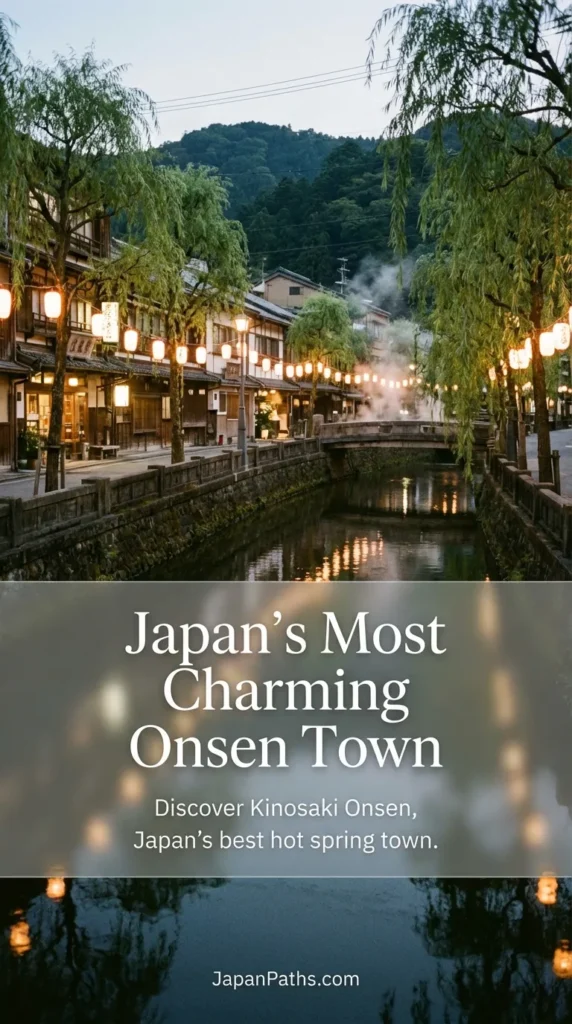
Willow trees line the central canal. These trees have symbolic meaning in Japanese culture and add to the town’s historic atmosphere.
The architecture stays deliberately traditional, with most buildings following old design standards. I think that’s part of Kinosaki’s charm.
Etiquette For Visiting A Japanese Onsen Town
You’ve got to wash your entire body thoroughly at the provided stations before entering any bath. Soap and water stations sit outside each pool, with stools and buckets.
This cleaning step isn’t optional—it’s expected. Tattoos are welcome at all seven public baths in Kinosaki, which is pretty rare since many Japanese onsen still restrict tattooed guests.
No swimming clothes or towels go in the water. I keep my small towel on my head or at the bath’s edge.
Key onsen rules:
- Remove all clothing in the changing room
- Wash completely before entering the bath
- Keep voices low and conversations quiet
- Don’t let long hair touch the water
- Rinse off soap completely before soaking
Walking through town in yukata is expected and honestly, kind of fun. Inns provide these robes for guests.
I always wear the left side over the right—right over left is only for funerals. It’s a small detail, but important.
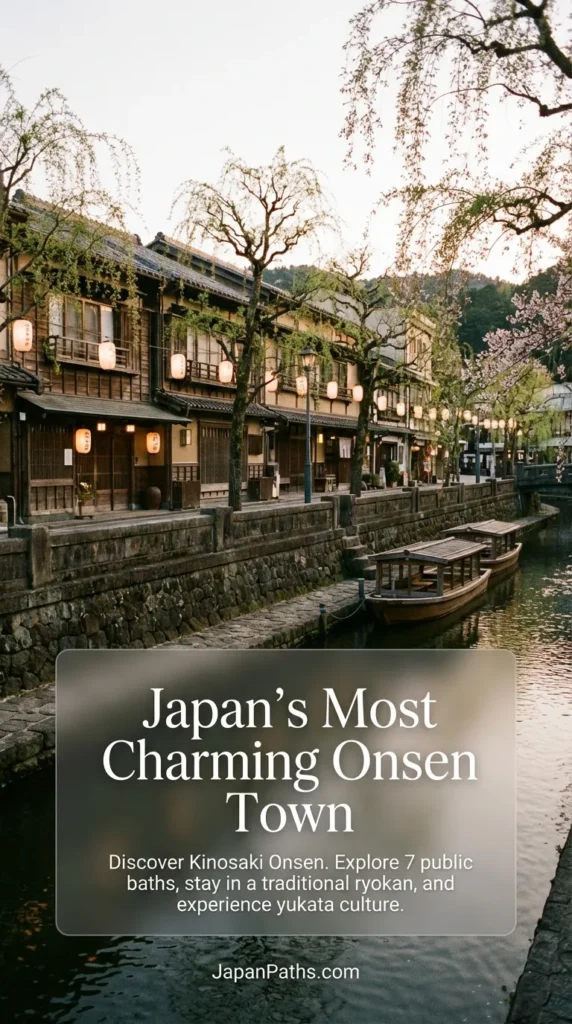
Planning Your Stay In Kinosaki Onsen
Kinosaki Onsen works best as an overnight trip if you want to really soak in the bath-hopping culture and the town’s traditional vibe. Most people stay one or two nights, arriving in the afternoon and spending evenings strolling between the seven public bathhouses in yukata and wooden geta sandals.
Getting To Kinosaki Onsen
Kinosaki Onsen sits in northern Hyogo Prefecture along the Sea of Japan coast. I recommend taking the JR Limited Express train from Kyoto (2.5 hours) or Osaka (3 hours).
The train ride follows scenic coastlines and is covered by the JR Pass. From Kinosaki Onsen Station, most ryokans are just a 5-15 minute walk away.
Many accommodations will pick you up if you call ahead. The town is compact and easy to get around on foot.
If you’re driving, there are parking areas, but honestly, the train is more relaxing. You can start unwinding as soon as you board.
Navigating The Town
The town stretches along a single willow-lined canal called Otani River. All seven public bathhouses are along this main street, so it’s simple to find your way.
Walking is the main way to get around. The whole town takes about 20 minutes to walk end to end.
In the evenings, guests wear yukata from their ryokan and wooden geta sandals as they move between bathhouses. Each bathhouse is clearly marked with signs in both English and Japanese.
Your ryokan will give you a free pass to access all seven public baths. The pass looks like a wooden keychain—just show it at each entrance and you’re good to go.
Essential Tips For An Authentic Onsen Experience
Bathing Etiquette: Wash up at the shower stations before you step into any bath. Never bring towels into the water. You can rest a small washcloth on your head or set it beside the bath.
Timing Your Visits: I think the late afternoon or evening is the best time to visit—there’s just more energy then. Each bathhouse closes one day a week on a rotating schedule, so check with your ryokan to avoid surprises.
What To Bring: Bring your small towel, your bathhouse pass, and maybe a little bag for your yukata. Leave your valuables at your accommodation; it’s just easier that way.
Tattoo Policy: All seven public bathhouses in Kinosaki welcome people with tattoos, which is honestly rare in Japan. This makes the town especially friendly for international visitors.
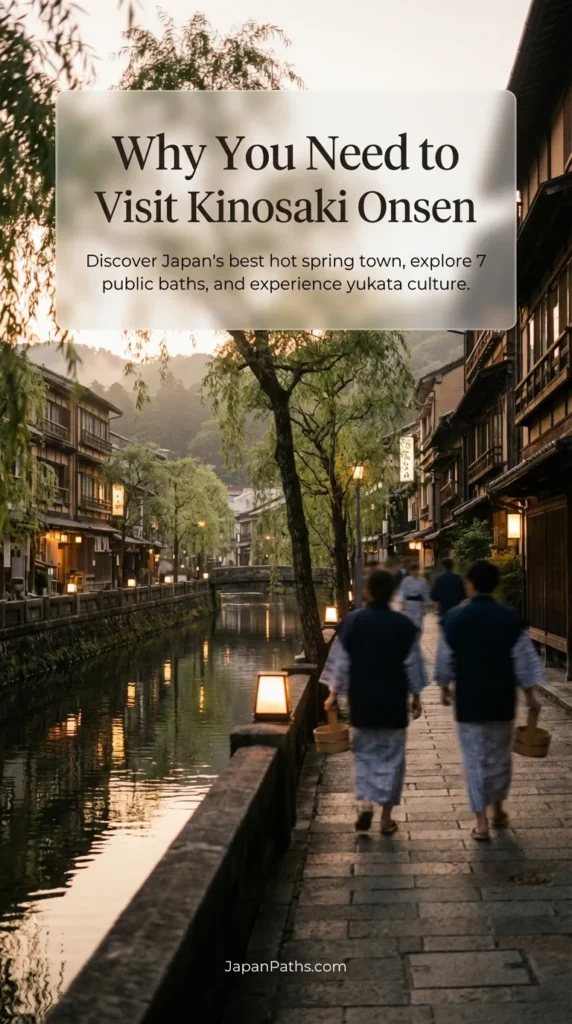
Frequently Asked Questions
Kinosaki Onsen has been welcoming guests for over 1,300 years. Travelers often have similar questions about visiting this historic hot spring town.
The seven public bathhouses use natural hot spring water. The town’s traditional ryokan line willow-shaded streets.
What are the must-visit hot spring baths in Kinosaki Onsen?
Kinosaki Onsen has seven public bathhouses, and each one has its own vibe. All seven use natural hot spring water discovered way back in the 8th century.
Goshonoyu Onsen is one of the most popular spots. I’d suggest trying at least three or four different bathhouses while you’re here—each one feels unique.
The bathhouses have different hours and may close on different days. Most ryokans give you a pass for free entry to all seven public baths.
How can one fully experience the charms of Kinosaki Onsen town?
The classic way is to stay at a ryokan and wear a yukata as you wander from bath to bath. For me, strolling along the Otani River in the evening really captures that old-town magic.
The willow-lined canal and old architecture set the scene. The town actually got two stars in the Michelin Green Guide Japan in 2013, which says something.
Wooden geta sandals and yukata are pretty much the uniform for an evening walk under the lanterns. I’d also recommend visiting Onsenji temple, which sits on the hillside above town.
The Kinosaki Onsen Tourism Association has maps and info to help you plan your own bath-hopping adventure.
What is the history and cultural significance of Kinosaki Onsen?
People discovered hot springs in Kinosaki around the 8th century. Over the next 1,300 years, the town grew into what many folks see as Japan’s classic hot spring destination.
Kinosaki managed to keep its traditional architecture and bath culture alive through the centuries. That’s what really sets it apart from modern resort towns.
The seven public bathhouses show off a communal approach to onsen culture that goes back hundreds of years.
Are there any seasonal events or festivals in Kinosaki Onsen that visitors should not miss?
Kinosaki throws seasonal celebrations all year. In spring, cherry blossoms bloom along the canal—perfect for photos.
Summer brings lantern displays along the river. Winter draws people for the hot springs and fresh crab from the Sea of Japan coast.
The town’s vibe changes with every season. I’d check with the Kinosaki Onsen Tourism Association for event dates when you’re planning your trip.
What are the accommodation options in Kinosaki Onsen, including traditional ryokans?
Most places to stay in Kinosaki are traditional ryokans. These inns usually include dinner and breakfast in the price.
Nishimuraya Honkan is one of the historic luxury options. Kinosaki Onsen Sensui is another favorite among travelers who want the classic experience.
Ryokans often have their own private baths and give you passes to the seven public bathhouses. Many use the natural hot spring water for both their main and private baths.
Room rates can vary a lot depending on service and meal quality. In my opinion, staying at a traditional ryokan really makes the Kinosaki experience.
How do visitors navigate transportation to and within Kinosaki Onsen?
Kinosaki Onsen sits up in northern Hyogo Prefecture, right along the Sea of Japan. The town’s train station links up with major cities all over the Kansai Region.
Walking is honestly the best way to get around here. The town center is compact, and you’ll find most bathhouses and ryokans within a 15-minute stroll along the main street by the Otani River.
You really don’t need any other transportation once you’re in town. I’ve always found the distances between attractions pretty easy, even if you’re shuffling along in those clunky wooden geta sandals.