
Tokyo’s often called expensive, but honestly, some of the best experiences here are totally free. You can wander through historic shrines, stroll in lush parks, poke around unique neighborhoods, and soak up epic city views—all without spending a single yen.
The trick is knowing where to look, dodging the usual touristy stuff. I put this guide together to highlight free activities that are actually worth your time.
These aren’t just filler ideas. From peaceful temple grounds to lively markets and unexpected art corners, every spot here shows off what makes Tokyo, well, Tokyo.
1. Visit Asakusa Shrine and explore Nakamise Shopping Street
I usually kick off my Asakusa visits at Sensō-ji Temple. It’s Tokyo’s oldest, dating back to 645.
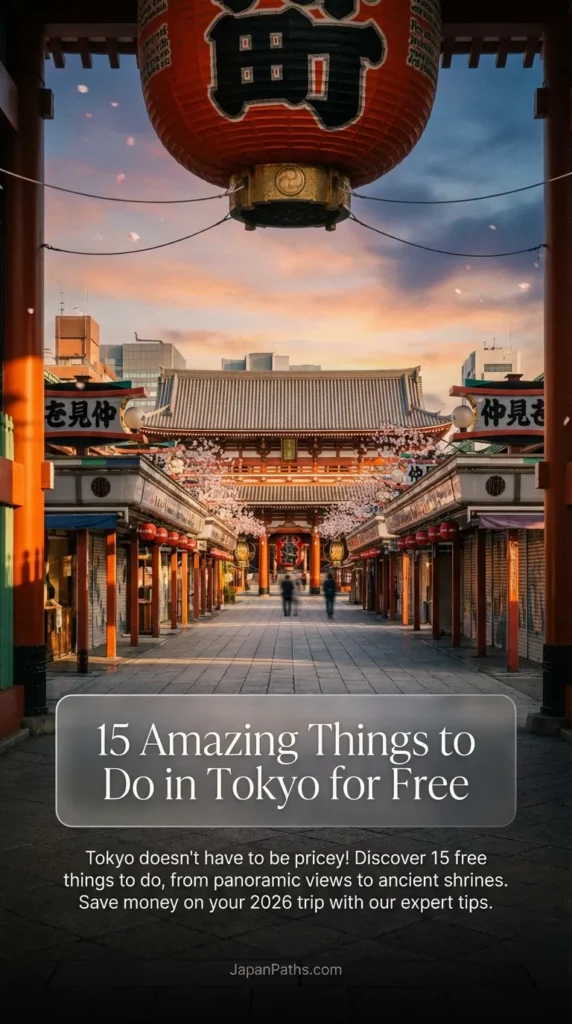
The big red lantern at Kaminarimon Gate marks the entrance. Nakamise Shopping Street connects the gate to the temple and stretches about 250 meters.
Roughly 90 small shops line both sides. It’s honestly one of Tokyo’s prettiest shopping streets, and browsing is free.
You’ll spot traditional snacks—rice crackers, sweet red bean treats—and all kinds of souvenirs like folding fans and kimono accessories. I love watching shopkeepers prepare fresh food right in front of everyone.
The temple grounds are open to all. I like watching people pray or burn incense at the main hall; it feels peaceful, even if there are crowds.
Walking along the nearby Sumida River adds something extra. Sometimes I catch a glimpse of Tokyo Skytree, which makes for this cool old-meets-new vibe.
The whole area is lively all day, so you can drop by whenever it fits your plans.
2. Walk through Ueno Park and enjoy its open spaces
Whenever someone asks about free things to do in Tokyo, I always mention Ueno Park. It’s open 24/7 and doesn’t cost a thing.
You can cross the whole park in about an hour. It’s one of the best green spaces near central Tokyo, just a short walk from Ueno Station.
The park has wide, tree-lined paths and plenty of benches. Locals often gather on the lawns for picnics or just to relax.
Shinobazu Pond sits at the center and makes for a peaceful escape. Walking around the pond, you get nice views of the water and greenery.
I’ve used the park as a quick break between sightseeing stops. There are also scattered cafes if you want a snack or coffee.
The vibe is totally different from Tokyo’s busy streets. Here, you get a mix of nature and city life without spending anything.
3. Explore the Bandai Namco Museum for kawaii and gaming culture
The Bandai Namco Museum in Asakusa surprised me—if you’re into Japanese pop culture, it’s a fun stop. Best part? It’s free to enter.
The museum covers two floors and celebrates the company behind Pac-Man, Gundam, and Tamagotchi. I liked checking out the display cases of retro games and modern merch, which show off Bandai Namco’s history.
Outside, you’ll spot huge character models like Doraemon and Ultraman—perfect for photos. Inside, the focus is on kawaii culture and gaming history. It’s not a huge place, so 30 to 45 minutes is plenty.
You’ll find classic arcade cabinets and all sorts of gaming memorabilia. I appreciate that it gives a real glimpse into Japanese gaming culture without needing a ticket. Since it’s in Asakusa, you can easily combine it with temple visits or shopping streets.
4. Relax at Yoyogi Park, a popular local hangout
I love Yoyogi Park—it’s massive, about 54 hectares, and sits between Shibuya and Harajuku. Getting there from Harajuku Station is easy.
Entry is free, and the park stays open around the clock. There are wide walking paths, picnic spots, and flower displays year-round.
Locals bring blankets and food for picnics under the big trees. During cherry blossom season, crowds gather for the sakura, and in autumn, the changing leaves are gorgeous.
You’ll see people jogging, cycling, or just lounging on the grass. The park attracts a mix of tourists and locals, so it feels genuinely lived-in. Dog owners often head to the dog run areas too.
It’s right next to Meiji Shrine, so you can hit both in one trip. Bring a picnic blanket and spend a few hours unwinding away from the city rush.
5. Visit Meiji Shrine, a serene Shinto sanctuary
Meiji Shrine is one of Tokyo’s most peaceful escapes, and it doesn’t cost a yen. It’s tucked inside a huge evergreen forest, right next to bustling Harajuku.
Walking through the towering torii gates feels like stepping into another world. The forest path leading up to the main shrine buildings really helps you leave the city noise behind.
The shrine honors Emperor Meiji and Empress Shoken. Sometimes you might catch a traditional Shinto ceremony or even a wedding procession in classic dress.
The wooden architecture is beautiful—definitely worth lingering over. I suggest going early in the morning for a quieter visit, as it gets busy on weekends.
You can easily spend an hour wandering the paths and grounds. Plus, it’s simple to combine with other Harajuku or Yoyogi Park activities.
6. Discover quirky shops and street art in Shimokitazawa
Shimokitazawa is great if you want to see Tokyo’s creative side without spending anything. It’s just west of Shibuya and has a chilled-out vibe that’s a nice break from the crowds.
There are over 200 vintage and thrift shops here. I can browse for hours—no need to buy, just window-shopping is fun.
The narrow streets are full of colorful murals and street art. The area has a bohemian feel, with indie shops tucked into every corner.
Wandering through the maze-like streets, I always stumble on something new. The neighborhood draws artists and creative types, and you can see it in the quirky storefronts and hand-painted signs.
Most shops are happy to let you browse. I just enjoy soaking up the artsy atmosphere and watching local life unfold.
7. Stroll around the Imperial Palace East Gardens
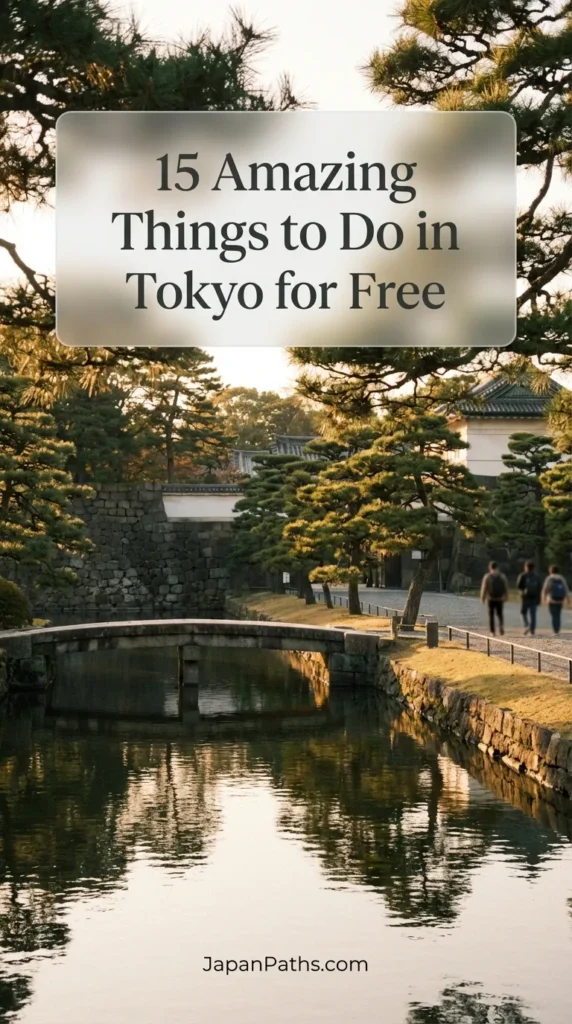
The Imperial Palace East Gardens offer a peaceful escape from Tokyo’s busy streets. They’re built on the old site of Edo Castle, where shoguns used to live.
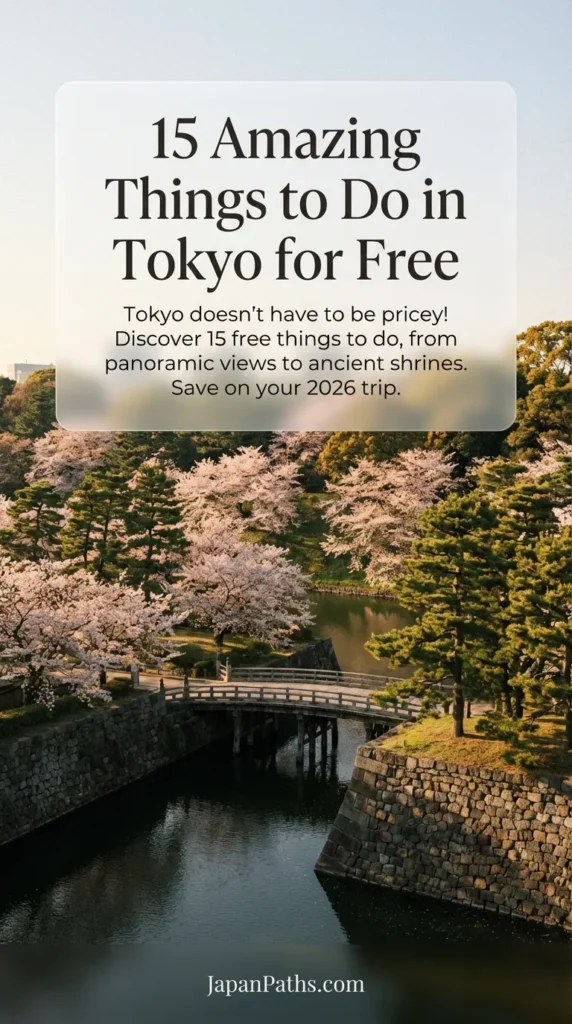
Entry is free all year. The gardens cover about 210,000 square meters, with paths winding past stone foundations of watchtowers and guardhouses from the Tokugawa era.
I love that the gardens change with each season—cherry blossoms in spring, colorful leaves in fall. The original moats and walls still stand, so you get a real sense of the old castle’s layout.
It’s a short walk from Tokyo Station to the entrance. Free audio guide apps are available, and English signs throughout make it easy to find your way.
Just a heads-up: the gardens close on Mondays and Fridays, so plan ahead.
8. Experience the vibrant atmosphere of Ameya-Yokocho Market
Ameya-Yokocho is a must if you want a real Tokyo experience without spending cash. This lively market street runs about 400-500 meters between Ueno and Okachimachi stations, packed with over 400 shops beneath the train tracks.
Walking through Ameyoko is free, and honestly, the atmosphere is the main draw. Vendors shout out deals, and you can smell street food everywhere.
You can watch seafood stalls in action, see merchants haggle, and soak up a market vibe that goes back to 1945. The place still feels like an old-school market, even though it’s in the middle of modern Tokyo.
The name comes from “Ameya Yokocho” (candy store alley) or maybe “America,” since American goods used to be sold here. Now you’ll find everything from produce to cheap clothes.
Late afternoon is the most lively time. You don’t have to buy anything—just enjoy the energy.
9. Watch the city skyline from the Tokyo Metropolitan Government Building observation deck
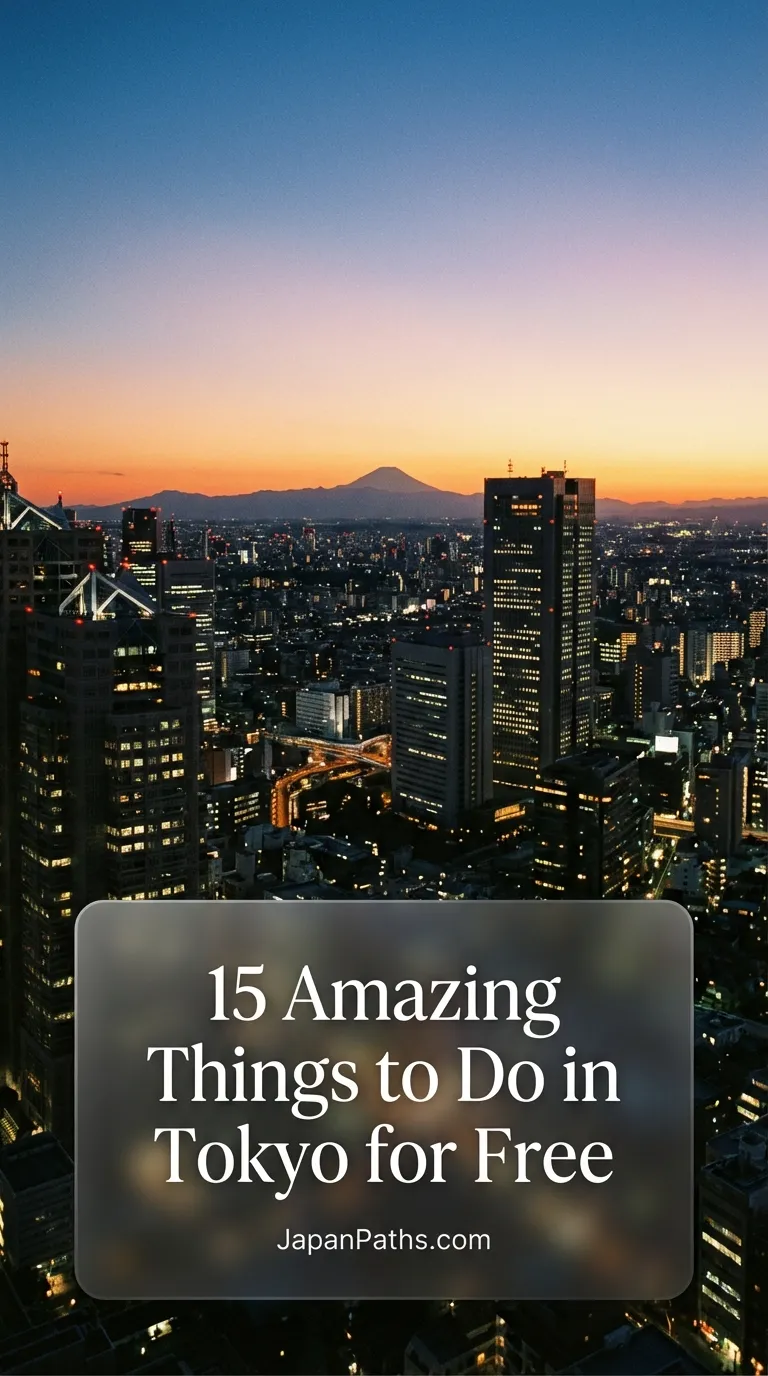
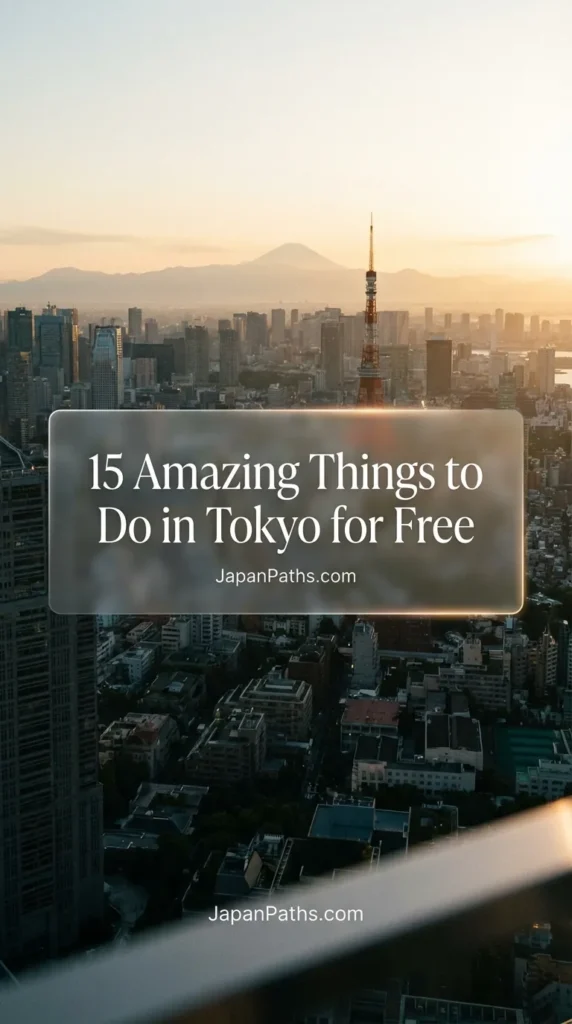
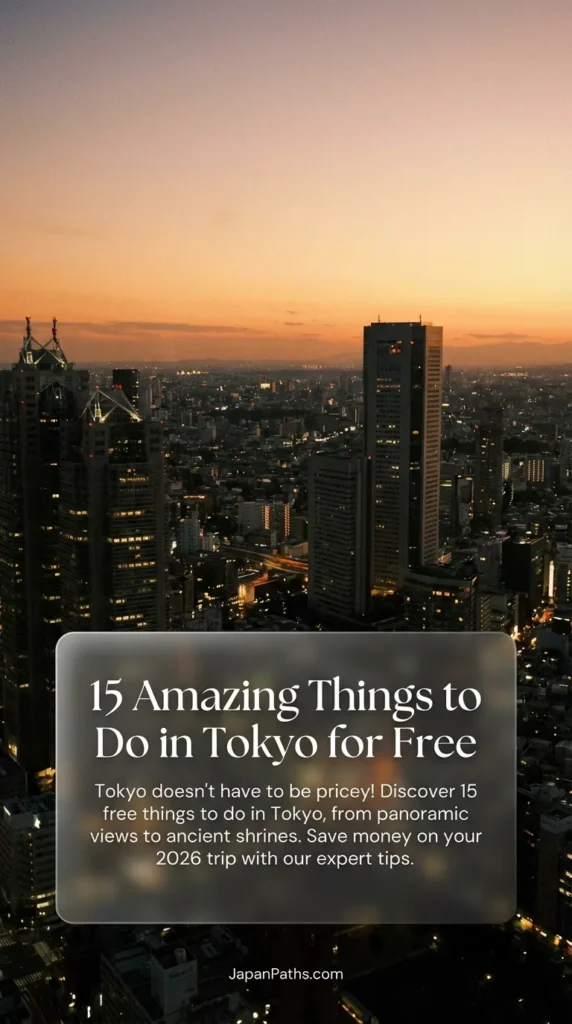
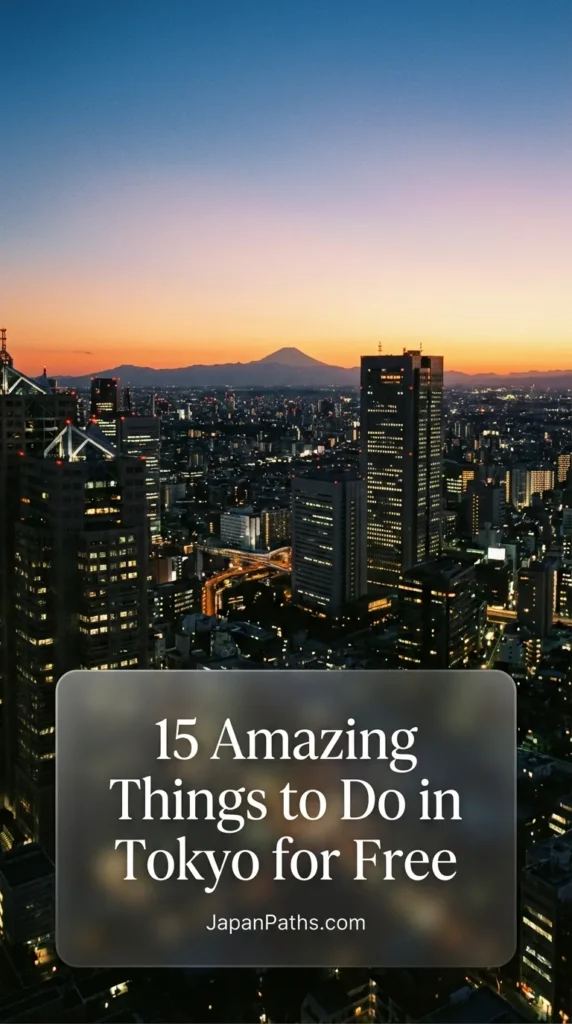
One of Tokyo’s best secrets is in Shinjuku: the Tokyo Metropolitan Government Building has free observation decks on the 45th floor, 202 meters up.
Most observation decks in Tokyo charge you, but not this one. There are two towers, each with its own deck.
I took the elevator from the first floor—it shot up to the top in under a minute. The 360-degree views are incredible, stretching across the city.
On clear days, you can even spot Mount Fuji. I visited during the day and at night; both times, the city looked completely different.
The deck isn’t just about the view. It helped me get my bearings and pick out places I wanted to visit later. For a freebie, it’s as good as many paid decks in Tokyo.
10. Explore the Suginami Animation Museum
If you’re into anime, the Suginami Animation Museum is a hidden gem. It’s totally free to enter.
The museum, run by Tokyo Polytechnic University, is in Ogikubo—less than 20 minutes from Shinjuku or Shibuya. Inside, you can check out exhibits on Japanese animation, from its early days in the 1900s up to modern anime.
The hands-on activities are my favorite part. You can try voice dubbing, watch short films, and learn basic animation with the interactive displays.
English audio guides and signage make it easy for anyone. The exhibits work for all ages, whether you’re a hardcore anime fan or just curious about the culture.
The museum focuses on anime history and education, not specific shows. It’s a great stop if you want to understand how Japanese animation developed.
11. Visit the Nezu Shrine and stroll through its traditional grounds
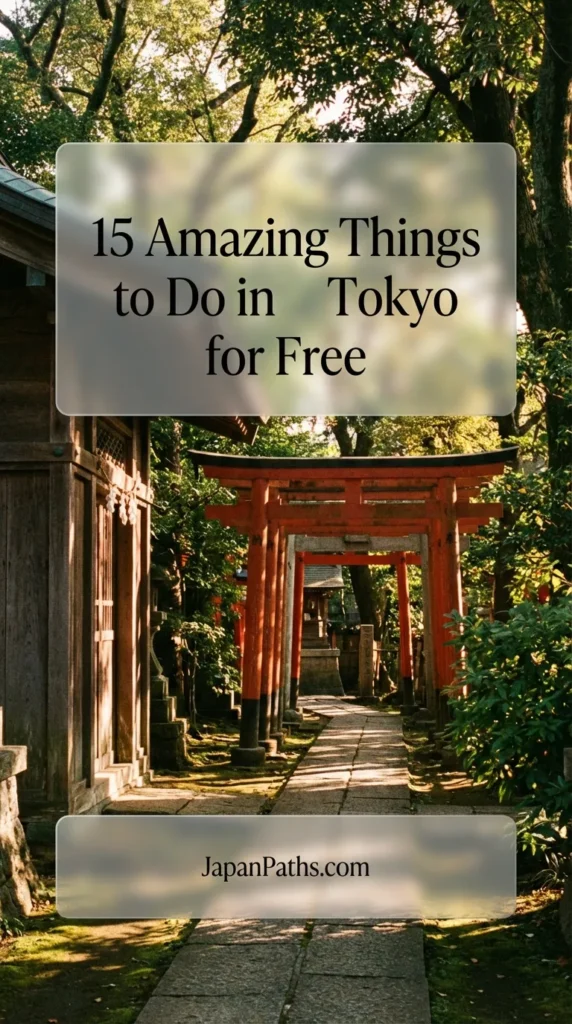
Nezu Shrine is one of Tokyo’s most peaceful spots, and it’s free. The shrine dates back about 1,900 years, though the current buildings were rebuilt in 1706.
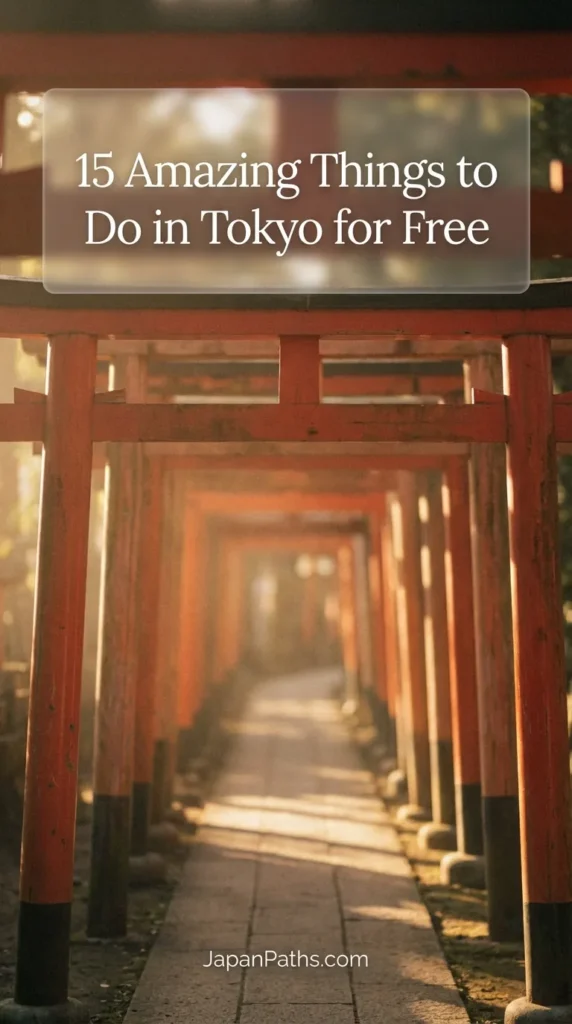
It’s in the Bunkyo district, not far from Ueno Park. I walked through rows of bright red torii gates that form a tunnel-like path—reminds me of Kyoto’s Fushimi Inari, just smaller.
The grounds have traditional wooden buildings, now protected as important cultural properties. I spent time wandering quiet paths among tall trees.
If you visit between late April and early May, the azalea garden is in full bloom. Getting there is easy by subway—Sendagi, Nezu, or Todaimae stations are all close.
The area around the shrine, Yanesen, has charming old streets worth exploring. The shrine offers a real break from Tokyo’s busy center, and you get to see classic architecture without the crowds or entrance fees.
12. Check out the free exhibits in Tokyo National Museum’s Ueno Park outdoor areas
It’s great that you can wander parts of the Tokyo National Museum grounds without paying anything. The museum sits inside Ueno Park, and its outdoor spaces are open for everyone to stroll through for free.
The grounds are gorgeous and really worth a walk. You’ll spot traditional Japanese architecture and peaceful gardens, giving you a taste of what’s inside the museum even if you never step indoors.
The exterior itself is impressive, honestly. The main building’s classic design shows off Japanese architectural style, and just walking the perimeter lets you soak up the scale and history of Japan’s oldest national museum, which first opened way back in 1872.
If you’re on a budget but craving some culture, these free outdoor areas are a solid option. Sometimes, the museum even offers free admission days—check their website before you go, just in case.
With several other museums nearby, Ueno Park is a nice base for exploring the area. The park itself is always free to enter, and you can easily spend an afternoon museum hopping.
13. Walk the Meguro River, especially beautiful during cherry blossom season
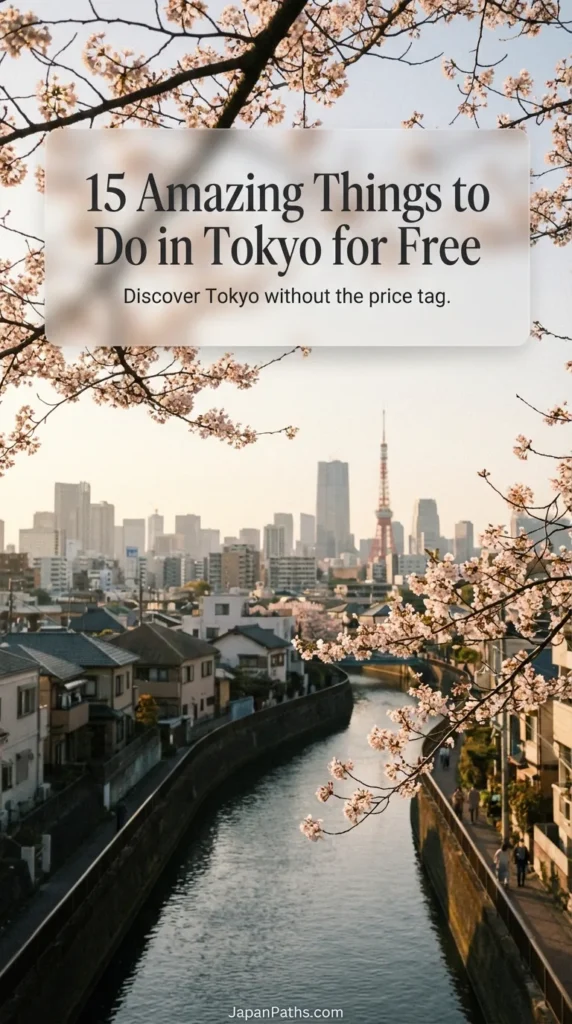
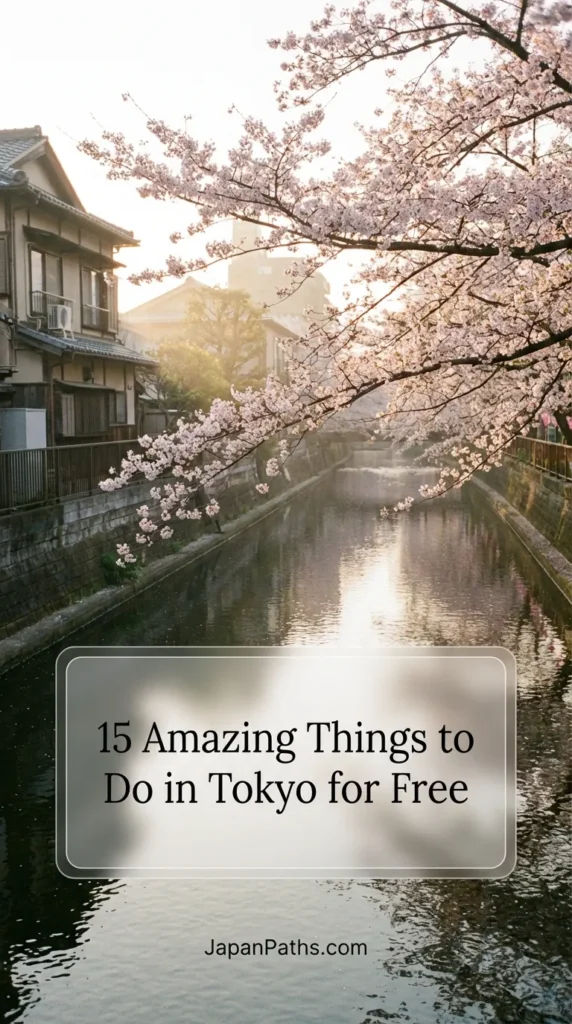
The Meguro River is one of those things I always tell people to try in Tokyo. It’s totally free, open all day and night, and honestly, it’s hard to beat during cherry blossom season.
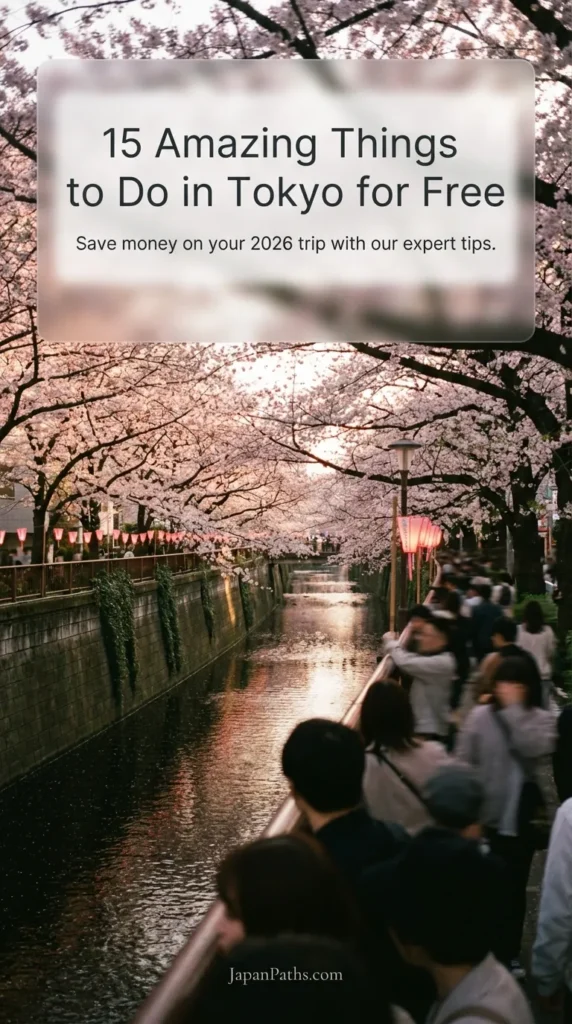
About 800 cherry trees line the riverbanks for nearly 4 kilometers. In late March and early April, they create this pink tunnel overhead. When the petals start drifting onto the water, it’s just about perfect.
The river winds through Meguro, Setagaya, and Shinagawa before reaching Tokyo Bay. The stretch between Ikejiri-Ohashi Station and Shimomeguro is the most popular.
At night during sakura season, pink lanterns light up the trees and the whole place feels kind of magical. Sure, it gets crowded, but I think it’s worth braving the crowds at least once.
Even outside cherry blossom time, the riverside walk is a peaceful break from Tokyo’s busier areas. The neighborhood feels relaxed, and there are plenty of little cafes and shops to duck into along the way.

14. Explore Yanaka Ginza, a charming old Tokyo neighborhood
Yanaka Ginza always feels like stepping back in time. The area survived World War II bombings, so a lot of Showa-era buildings are still standing, which is pretty rare in Tokyo.
The main street has around 60 tiny shops and food stalls. It’s so much more relaxed than places like Shibuya or Shinjuku. Locals actually shop here for their daily groceries, so the vibe is genuinely authentic.
Yanaka’s also famous for its cat obsession. You’ll spot cat decorations, themed shops, and sometimes even real cats just hanging out. The narrow streets and old wooden buildings offer a glimpse of Tokyo from decades ago.
If you’ve got time, wander over to Yanaka Cemetery—it’s peaceful, especially when the cherry trees bloom. The neighborhood sits right behind Ueno Park, so you can easily combine both if you’re exploring on foot.
Just walking around costs nothing, and honestly, that’s the best way to soak up Yanaka. Browse the shops, admire the quirky architecture, and just enjoy the local scene.
15. Visit Oedo Antique Market on weekends for browsing unique items
The Oedo Antique Market is a real gem if you’re into browsing old treasures. It’s held twice a month at Tokyo International Forum, usually on the first and third Sunday from 9:00 AM to 4:00 PM.
It’s Japan’s largest outdoor antique market, with about 250 dealers showing off their finds. You can wander through Japanese pottery, vintage kimonos, Western tableware, and all sorts of accessories without paying a yen to get in. It’s only a minute’s walk from Yurakucho Station, so super easy to reach.
You’ll find both Japanese and foreign antiques here. I’ve seen everything from ceramics and textiles to old clocks and quirky decorative stuff. The Forum’s modern glass building gives the market this cool contrast between old and new.
The market takes a break in August because of the heat, and it closes if it rains, so I always check the schedule before heading out. Dealers are used to foreign shoppers, and many are happy to chat or answer questions.
Browsing is free, but I usually bring some cash in case something catches my eye. With the market open until 4:00 PM, there’s plenty of time to poke around the stalls.
Tips for Enjoying Free Activities in Tokyo
Getting around smoothly, knowing a bit of etiquette, and having your phone sorted will make your free adventures in Tokyo a lot more fun.
Navigating Public Transportation
Grab a rechargeable IC card like Suica or Pasmo when you arrive. These cards work on all trains, subways, and buses, and you can pick one up at any big station for a 500 yen deposit (which you get back when you return the card).
The JR Yamanote Line is my go-to for getting to most free spots. It loops around central Tokyo and hits major areas like Shibuya, Shinjuku, Harajuku, and Ueno. Trains are super frequent, like every 3-5 minutes during the day.
Download Google Maps or Japan Transit Planner before you go. Both are great for figuring out train routes and even show you platform numbers and times. Tokyo’s train network seems confusing at first, but most stations have English signs, so it’s manageable.
Money-saving tip: Walking between nearby stations usually takes 15-20 minutes and lets you find cool little neighborhoods you wouldn’t see otherwise. I often walk from Harajuku to Shibuya or Asakusa to Ueno just to save a bit on fares.
Respecting Local Customs
Take your shoes off when entering temples, shrines, or old buildings. Look for shoe racks or cubbies at the entrance. I always try to wear decent socks since you’ll be padding around in them.
Keep your voice down in public places. People in Tokyo speak quietly on trains and in restaurants. Making phone calls on trains is frowned upon, so I stick to texting if I need to communicate.
Don’t eat or drink while walking in the street. It’s not really done here. If you grab something from a vending machine, there’s usually a spot next to it to finish your drink before moving on.
Photography etiquette: Always ask before taking photos of people, especially at shrines and temples. Some sacred spots don’t allow photography at all—look for signs with a camera crossed out.
Staying Connected and Finding Wi-Fi
Free Wi-Fi pops up at most train stations, convenience stores like 7-Eleven, Family Mart, and Lawson, plus lots of major tourist spots in Tokyo. Just look for networks called “Japan Connected-free Wi-Fi” or “7SPOT” when you’re at convenience stores.
Honestly, Starbucks and McDonald’s have some of the most reliable free Wi-Fi in the city. The signal usually holds up for maps, messaging, and even video calls.
You don’t have to buy anything to use their Wi-Fi, but grabbing a small drink never hurts. Feels polite, right?
I always download offline maps in Google Maps before heading out for the day. That way, if Wi-Fi drops out, I can still get around.
Sometimes I screenshot important addresses or directions too, just in case. It’s saved me more than once.
Tourist information centers at big stations lend out free Wi-Fi rental devices. They don’t have a ton, though.
If you want one, try showing up early in the morning before they’re gone.