
Konnichiwa! I’m Kaori, your local friend in Tokyo. If you are reading this, you are probably standing at the edge of a great adventure.
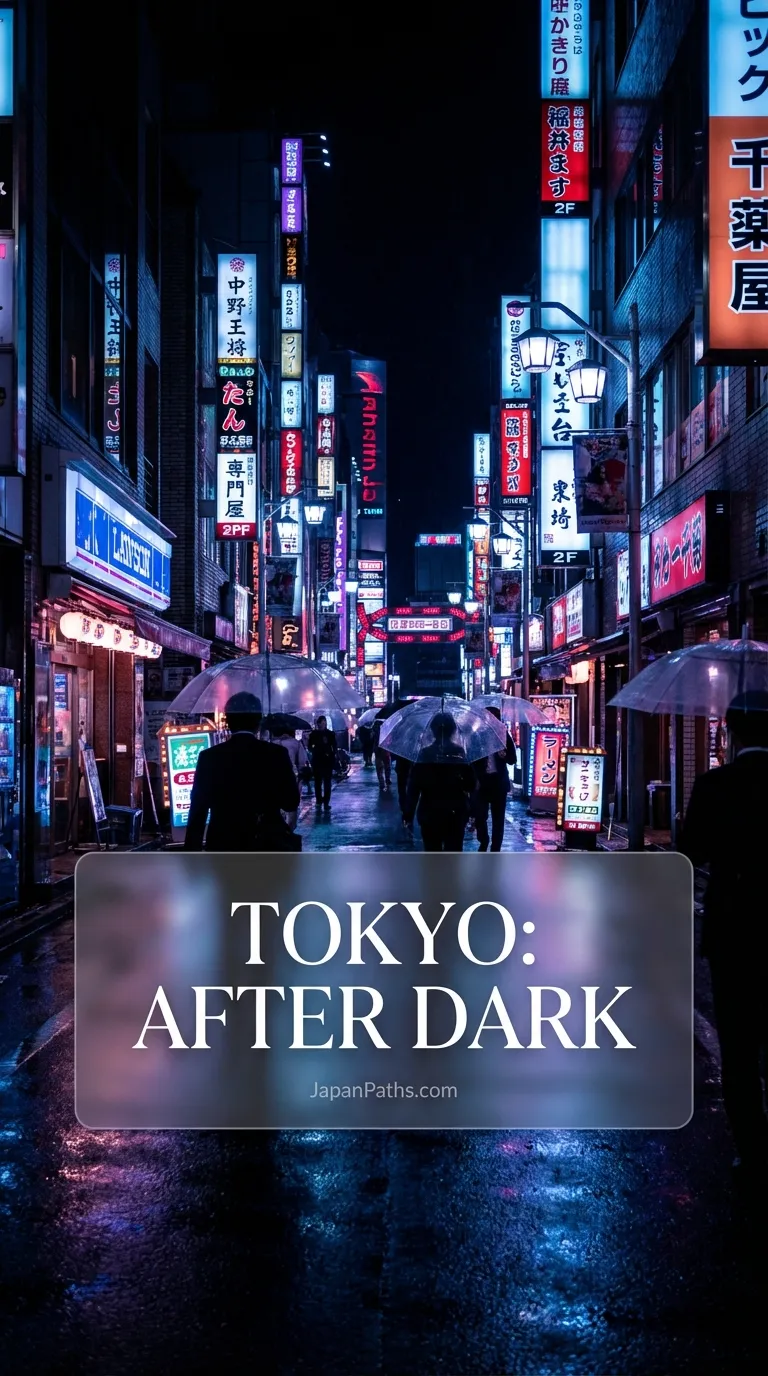
Planning a trip to Japan can feel overwhelming. I see it all the time with my friends from abroad. They have 50 tabs open, worrying about train passes, language barriers, and finding that perfect japan travel aesthetic they see on Pinterest. They want to see the neon lights of Shinjuku, but they also want the quiet, moss-covered temples I grew up visiting in Kyoto.
Let me take that stress away.
This isn’t just a list of spots; this is exactly how I would plan a 14-day trip for my best friend. It bridges the gap between the “Golden Route” must-sees and the authentic, breathing Japan that locals love.
Before we dive in, if you are completely new to planning, I highly recommend you read my “Start Here” guide for beginners to get oriented. But if you are ready to build your dream schedule, let’s go.
🌸 Kaori’s Promise
This itinerary is designed for flow. I’ve grouped areas to minimize walking and maximize the “wow” factor. We will mix high-energy city vibes with moments of pure Zen.
PHASE 1: The Boring (But Critical) Logistics
I know you want to get to the sushi and shrines, but we need to talk strategy. A smooth trip starts with smart logistics.
1. The Great JR Pass Debate (2026 Update)
Since the major price hike a couple of years ago, the nationwide JR Pass is rarely worth it for a standard Tokyo-Kyoto-Osaka loop. The 7-day pass is now around ¥50,000.
My Advice: For this 2-week itinerary, buy single Shinkansen tickets. It’s cheaper and gives you the freedom to ride the Nozomi (the fastest train), which the pass often restricts. However, if you plan to add Hiroshima (which we are!), look into the JR Kansai-Hiroshima Area Pass. It covers the expensive chunk of travel in Western Japan for a fraction of the cost.
2. Connectivity is Life
You cannot survive here without Google Maps. Free WiFi exists, but it is spotty. I always tell my guests to get an eSIM (like Ubigi or Airalo) before they fly. It connects as soon as you land.
3. The Magic IC Card
Don’t buy paper tickets for subways! Add a Suica or Pasmo card to your Apple Wallet (or get a physical Welcome Suica at the airport). It works on trains, vending machines, and even at convenience stores (Konbini).
DAYS 1-5: Tokyo – Neon Nights & Hidden Alleys
Welcome to my current home! Tokyo is a beast, but a beautiful one. The key is to conquer it neighborhood by neighborhood.
Day 1: Arrival & The Shinjuku Skyscape
You will likely land tired. Don’t push too hard. Drop your bags at your hotel (I recommend staying in Shinjuku or Shibuya for easy transport).
- Afternoon: Head to the Tokyo Metropolitan Government Building in Shinjuku. It’s free, and the view of the endless concrete jungle is the perfect “I’m finally in Japan” moment.
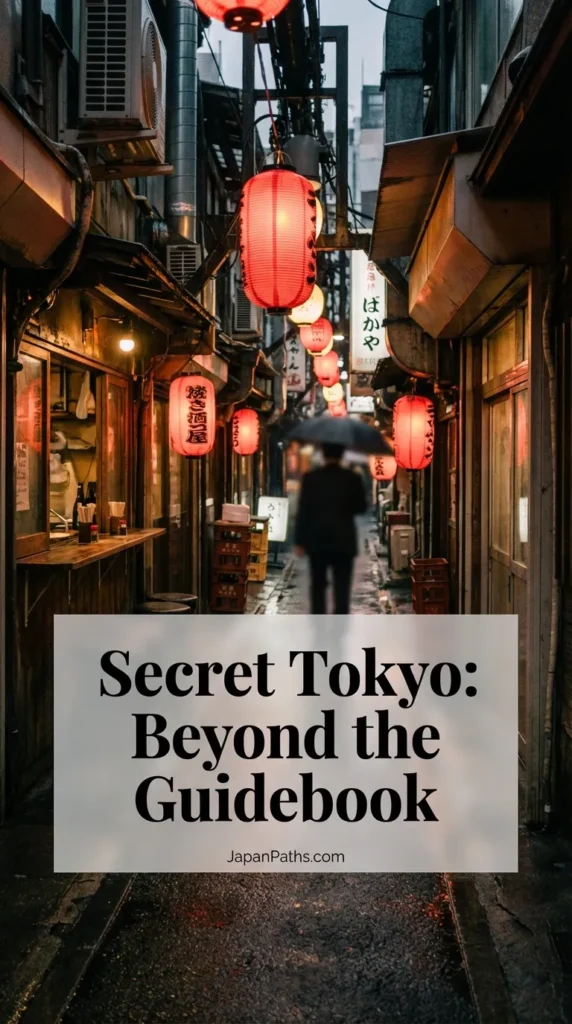
- Dinner: Dive into Omoide Yokocho (Memory Lane). It’s a narrow alley packed with tiny grilled chicken (Yakitori) stalls. It’s smoky, loud, and incredibly atmospheric.
Day 2: Old Tokyo (Asakusa) & Modern Vibes (Shibuya)
We are mixing the old and new today.
- Morning: Senso-ji Temple in Asakusa. Kaori’s Tip: Go at 8:00 AM. By 10:00 AM, it is a sea of tourists. Grab a fresh melon pan (sweet bread) from the street vendors.
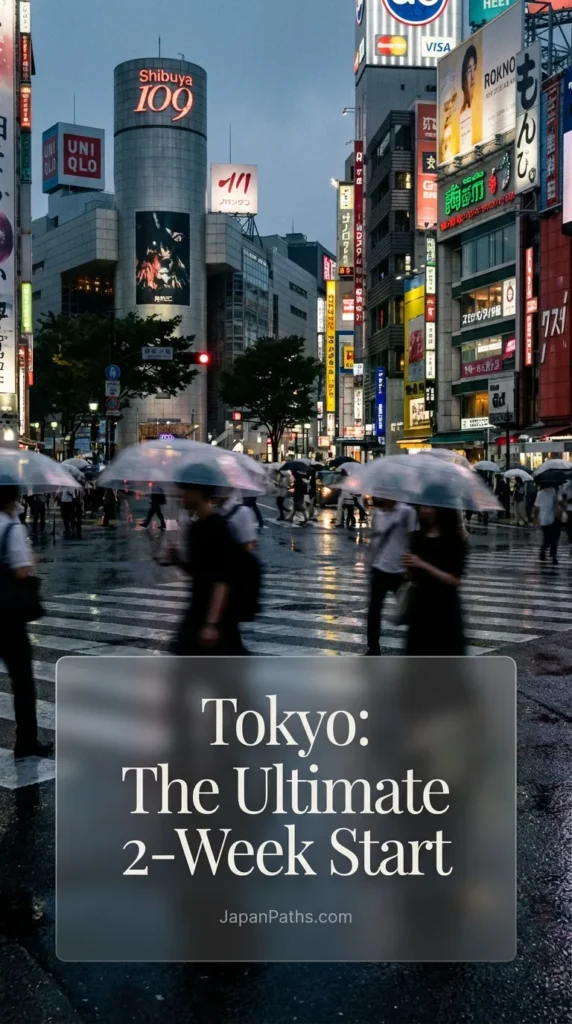
- Afternoon: Take the Ginza line across town to Shibuya. See the scramble crossing, but then quickly escape the crowds.
- Kaori’s Secret Spot: Walk 15 minutes to Oku-Shibuya (Deep Shibuya). It’s filled with aesthetic cafes and cheese stands. It’s where the locals actually hang out.
Day 3: The Book Town & Retro Coffee
This is my favorite day. We are going to Jimbocho, the used book district.
I love spending hours browsing vintage magazines here. But the real draw is the Kissaten (retro Showa-era coffee shops). This is a massive part of my japan travel aesthetic list.
☕ Recommended Cafe: Saboru (Jimbocho)
This place is legendary. It looks like a mountain lodge inside a city. Order their famous towering Strawberry Juice or the thick Pizza Toast. It feels like time stopped in 1970.
Rating: 10/10 for nostalgia.
Day 4: Harajuku & Omotesando
Skip Takeshita Street on a weekend—it’s a nightmare. Instead, walk the tree-lined avenue of Omotesando. Visit the Nezu Museum not just for the art, but for its stunning private garden which is an oasis of calm in the city.
Day 5: A Breathing Room Day Trip
You might need a break from the concrete. I suggest Kamakura (the seaside ancient capital) or Kawaguchiko (for Mt. Fuji views). If you are looking for more options, browse my guide to top destinations near Tokyo.
DAYS 6-9: Kyoto – The Soul of Japan
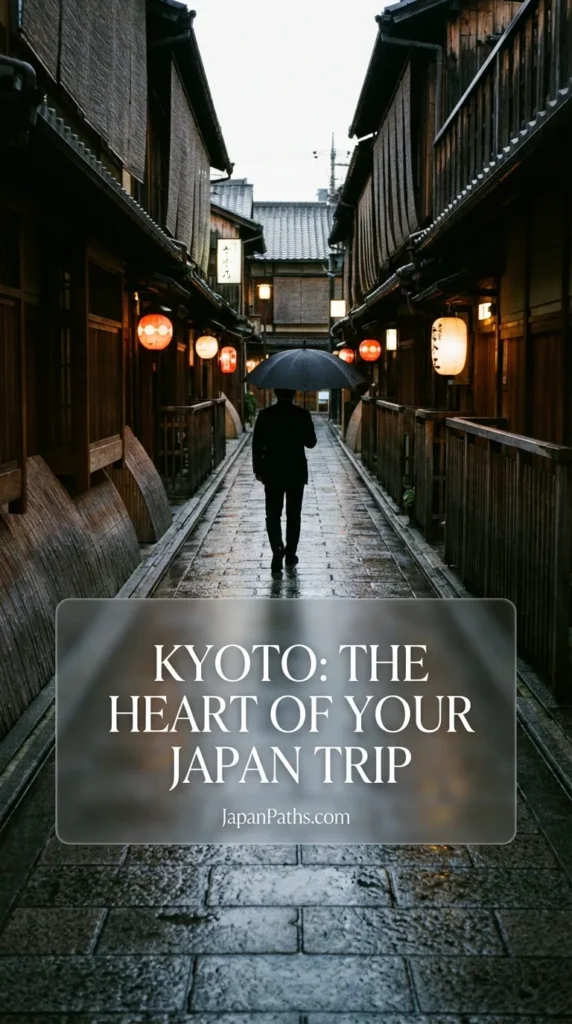
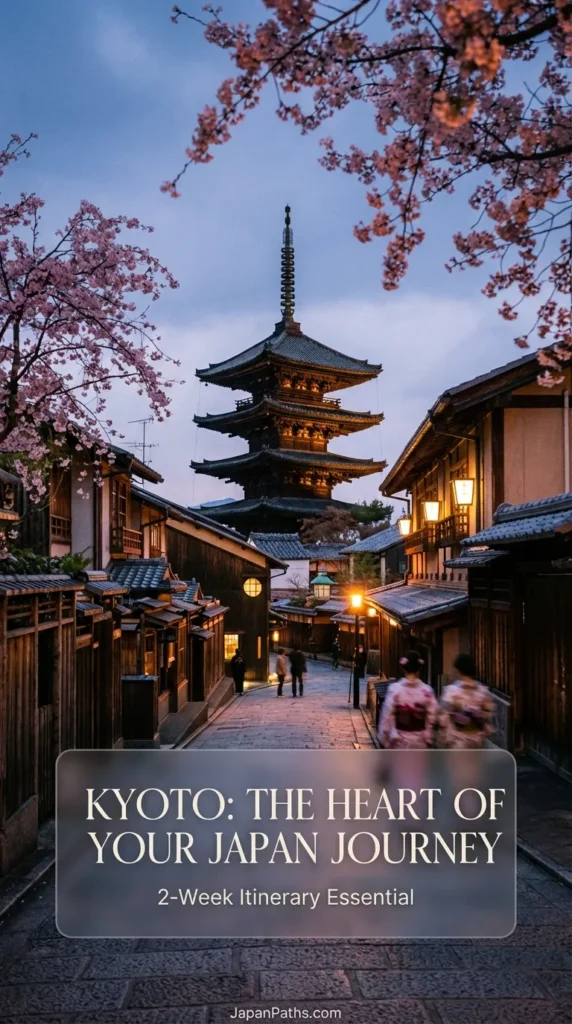
We take the Shinkansen west. I was born in Kyoto, and it holds my heart. But be warned: it is crowded. My strategy helps you avoid the masses.
Day 6: The Northern Higashiyama Walk
Most people rush to Kiyomizu-dera (which is beautiful, but packed). I prefer the northern route.
- Start: Silver Pavilion (Ginkaku-ji). Its moss garden is superior to the Golden Pavilion’s flashy gold, in my humble opinion.
- Walk: The Philosopher’s Path. It runs along a canal. Even outside cherry blossom season, it is green and peaceful.
- Kaori’s Lunch Pick: Try Omen near Ginkaku-ji for their famous udon noodles with seasonal vegetables.
Day 7: Arashiyama (The Early Bird Wins)
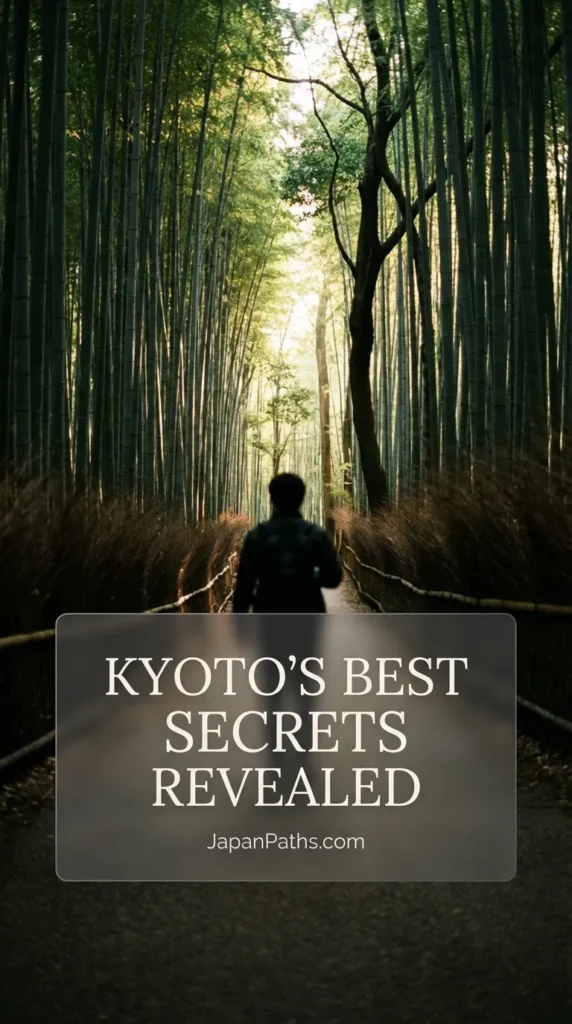
You must arrive at the Bamboo Grove by 7:30 AM. I am serious. The difference between 7:30 and 9:00 is the difference between magic and a theme park.
After the bamboo, visit Tenryu-ji Temple, then escape the crowds by hiking up to the Monkey Park Iwatayama. The view over Kyoto city is breathtaking.
🍵 Recommended Cafe: % Arabica Kyoto Arashiyama
Yes, the line is long. But grabbing a latte and sitting on the concrete steps by the Katsura River is a core memory. For a quieter spot, check out Bread, Espresso & Arashiyama Garden, housed in a traditional thatched-roof building.
Day 8: Fushimi Inari & Hidden Gems
Hike the red gates of Fushimi Inari, but don’t stop at the bottom. The higher you hike up the mountain, the fewer people there are. At the top, it’s just you, the foxes, and the wind.
In the afternoon, visit Sanjusangendo. It houses 1,001 statues of Kannon. It is visually overwhelming in the best way possible.
Day 9: A Day for Yourself
Rent a bicycle. Kyoto is flat and bikeable. Cycle up the Kamo River delta. Watch the students practicing instruments and the hawks circling above. This is the real Kyoto life.
For more detail on structuring these days, I have a specific breakdown in my perfect 7-day itinerary guide which covers the Kyoto leg in depth.
DAYS 10-11: Hiroshima & Miyajima
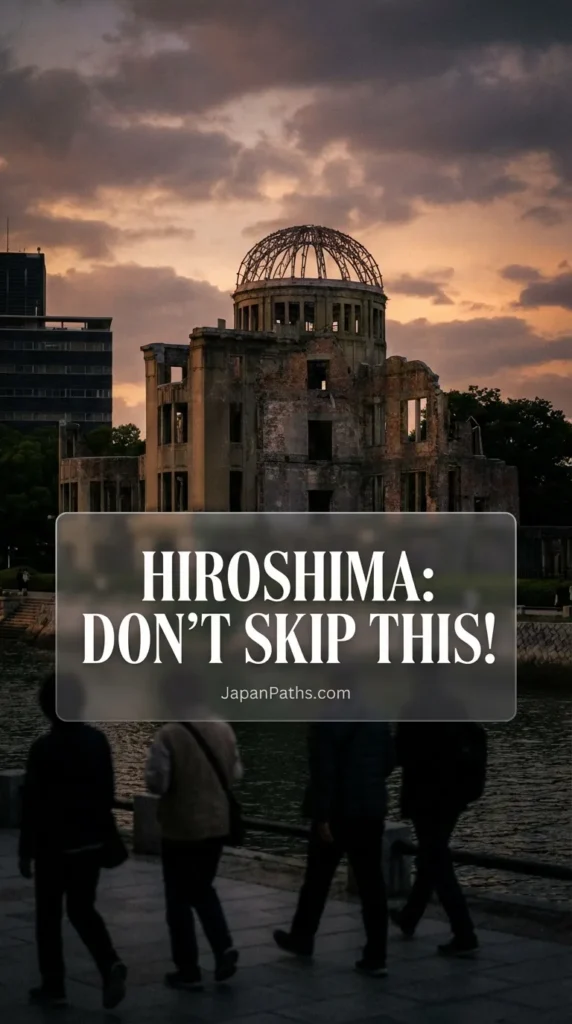
We extend the journey to Hiroshima. This city is a testament to peace and resilience.
Day 10: The Peace Memorial Park
Take the Shinkansen to Hiroshima. Spend the afternoon at the Peace Memorial Museum. It is heavy and emotional, but essential. Afterward, eat Okonomiyaki (Hiroshima style, with noodles) at Okonomimura—a building filled with 20+ stalls.
Day 11: Miyajima Island
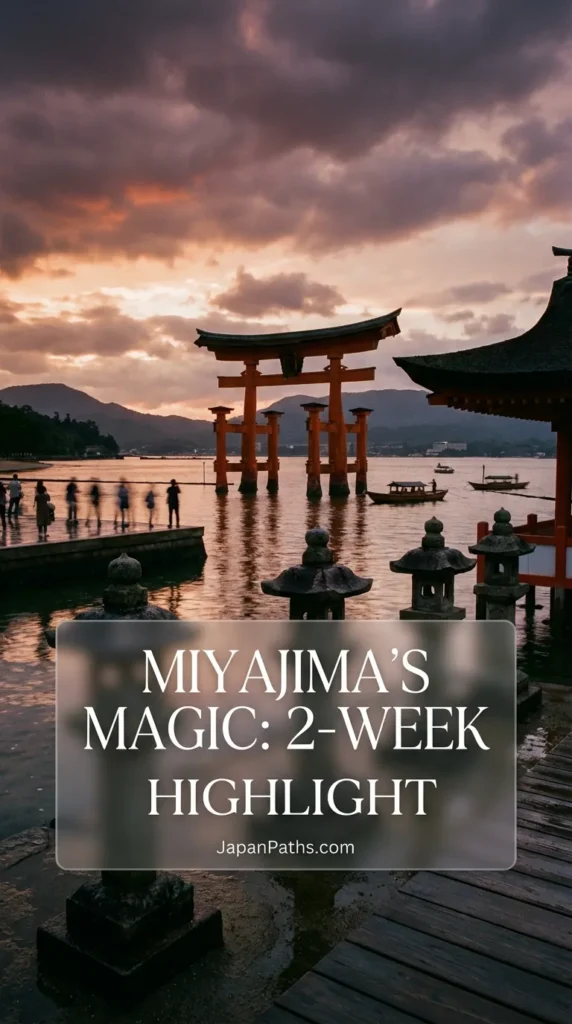
Take the ferry to Miyajima. See the floating Torii gate. The deer here are wild, so watch your paper maps! Hike (or take the ropeway) up Mount Misen for views of the Seto Inland Sea.
DAYS 12-13: Osaka – Japan’s Kitchen
Osaka is the rebellious younger brother of Tokyo. People talk louder, eat heartier, and stand on the right side of the escalator.
Day 12: Retro Osaka
Skip the malls. Head to Nakazakicho. It’s a neighborhood of old wooden houses saved from WWII bombings, now converted into vintage clothing shops and art galleries. It is the ultimate japan travel aesthetic location.
Day 13: Neon & Street Food
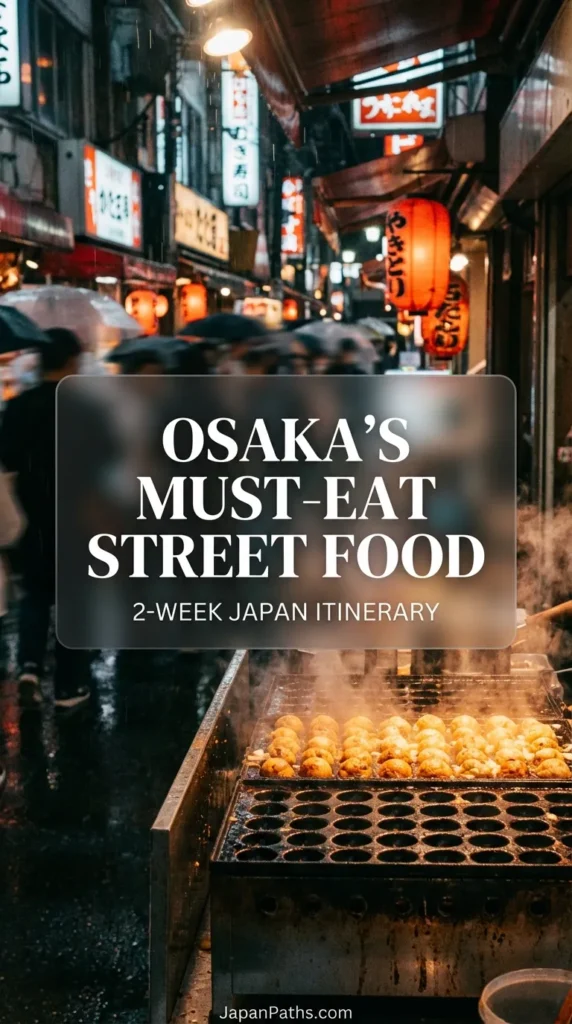
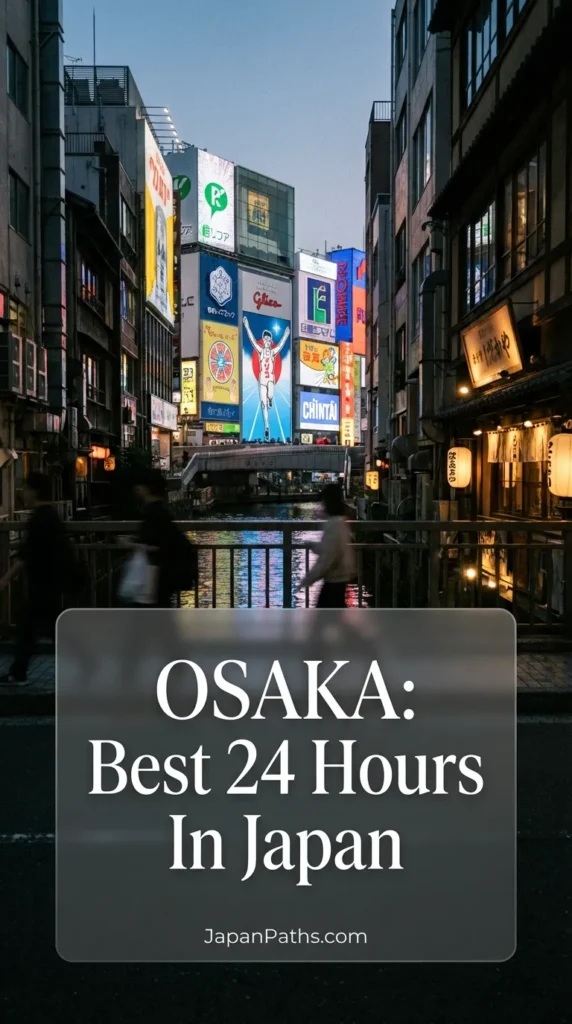
Spend your evening in Dotonbori. Eat Takoyaki (octopus balls) and Kushikatsu (deep-fried skewers). It is gaudy, loud, and fantastic.
If you have extra time, you can find more regional ideas in my full itinerary collection.
Day 14: Back to Tokyo & Departure
Take the Shinkansen back to Tokyo for your flight. Use this time for last-minute shopping at Don Quijote (get the KitKats and skincare!) or a final sushi meal.
👘 Kaori’s Seasonal Outfit Guide
“What do I wear?” is the #1 question I get. Japanese fashion is conservative but stylish. Here is my cheat sheet.
🌸 Japan Travel Outfit Spring (March-May)
Temples can be drafty! Layering is key.
Kaori’s Pick: A trench coat, light knit sweaters, and comfortable walking sneakers (you will walk 20k steps a day). A scarf is essential for chilly mornings.
☀️ Japan Travel Outfit Summer (June-August)
It is humid. Very humid. You will melt.
Kaori’s Pick: Linen wide-leg pants (airy but covers legs for mosquitoes and sun), moisture-wicking Uniqlo Airism tops, and a parasol (everyone uses one!).
🍁 Japan Travel Outfit Autumn (September-November)
The most stylish season.
Kaori’s Pick: Earth tones to match the leaves. A leather jacket or wool blazer. Boots are great, but make sure they are easy to slip on/off for temples.
❄️ Japan Travel Outfit Winter (December-February)
Tokyo is dry and cold; Kyoto is bone-chilling.
Kaori’s Pick: A long wool coat (very trendy here), Heattech thermals underneath everything, and warm socks. Don’t forget gloves.
For a deeper dive on seasonal planning, check out my seasonal guide.
🎎 Kaori’s Etiquette Corner
As a local, I appreciate visitors who try to follow our customs. It’s the concept of Omotenashi (hospitality) works both ways!
- Silence on Trains: We don’t talk on the phone on trains. We whisper if we talk to friends. It is a shared quiet space.
- Trash is Rare: There are almost no trash cans on the street. Carry a small plastic bag (like a Ziploc) to hold your trash until you find a bin (usually at convenience stores or train stations).
- No Tipping: Seriously. It creates confusion. A heartfelt “Arigato gozaimasu” is the best tip.
- Shoes Off: If there is a slight step up at an entrance or tatami mats, shoes come off. Wear nice socks (no holes!).
❓ FAQ: Kaori Answers Your Questions
1. Is 2 weeks enough to see Japan?
Absolutely. 2 weeks is the sweet spot. You can cover the “Golden Route” (Tokyo, Kyoto, Osaka) plus a side trip like Hiroshima or Kanazawa without feeling like you are running a marathon. You will leave wanting more, which is the best way to travel.
2. How much cash should I carry?
Japan is becoming more cashless, but many ticket machines, old temples, and retro cafes (Kissaten) still only take cash. I recommend keeping about ¥20,000 to ¥30,000 ($150-$200 USD) on you just in case.
3. Do I need to book restaurants in advance?
For high-end Sushi or Kaiseki, yes, months in advance. For standard Izakaya or Ramen spots, no. However, popular spots like the Kirby Cafe or Pokemon Cafe require reservations the second they open online.
4. Is Japan safe for solo female travelers?
Yes, it is one of the safest countries in the world. I often walk home alone at night in Tokyo without fear. Of course, always be aware of your surroundings, especially in nightlife districts like Kabukicho.
5. Can I survive with only English?
In Tokyo and Kyoto, yes. Signs are in English and Google Translate is a lifesaver. Locals might be shy to speak English, but they are incredibly helpful if you ask.
6. What is the best app for trains?
Google Maps is great, but Japan Travel by Navitime is excellent for filtering routes that accept the JR Pass (if you have one).
7. Should I stay in a Ryokan?
Yes! Do it for at least one night, preferably in Kyoto or Miyajima. It is expensive, but the experience of sleeping on tatami and having a Kaiseki dinner in your room is unforgettable.
8. How do I handle luggage on the Shinkansen?
If you have “oversized baggage” (160cm+ total dimensions), you MUST reserve the specific seats with luggage space at the back of the car. If you don’t, you may be fined. Better yet, use a luggage forwarding service (Takkyubin) to send big bags between hotels.
9. What if I have tattoos?
Tattoos are still stigmatized in traditional places like Onsen (hot springs). Look for “tattoo-friendly” onsen, or book a private bath (Kashikiri). In Tokyo gyms and pools, you may need to cover them.
10. Is the tap water safe to drink?
Yes, the tap water in Japan is perfectly safe and clean. You can refill your bottle at hotels and parks.
11. What is a “Goshuin”?
It is a handwritten stamp and calligraphy you can collect at temples and shrines. You need to buy a specific book (Goshuin-cho). It is a beautiful, spiritual souvenir of your journey.
12. When is the best time for Cherry Blossoms?
Usually late March to early April in Tokyo/Kyoto. But it varies every year! If you miss them, don’t worry—Wisteria in May and Autumn leaves in November are just as stunning.
Final Thoughts from Kaori
Japan is a country that rewards curiosity. Don’t just stick to the list. Turn down that narrow alleyway. Enter the shop that looks quiet. Try the food you can’t pronounce.
This 2-week itinerary is a framework, but the magic happens in the unplanned moments. I hope you fall in love with my country just as much as I love living here.
If you need more inspiration on where to go next, explore my Best of Japan collection.
Safe travels (Bon Voyage)!
– Kaori 🍵