
Cherry blossom season in Japan is honestly one of the best things you can see. The pink and white flowers only last a short time each spring, drawing millions of visitors from all over.
Planning your trip around the bloom dates gives you a much better chance of seeing the flowers at their peak. In 2026, cherry blossoms should start blooming in late March across major cities like Tokyo and Nagoya.
The bloom then moves north through early April to cities such as Kyoto, Osaka, and Sendai. The exact timing changes each year depending on the weather.
I’ll break down the forecast for each major city and region so you can figure out where to go. This guide covers bloom dates for Japan’s top viewing spots, plus a bit about how experts predict them and what to expect when you visit.
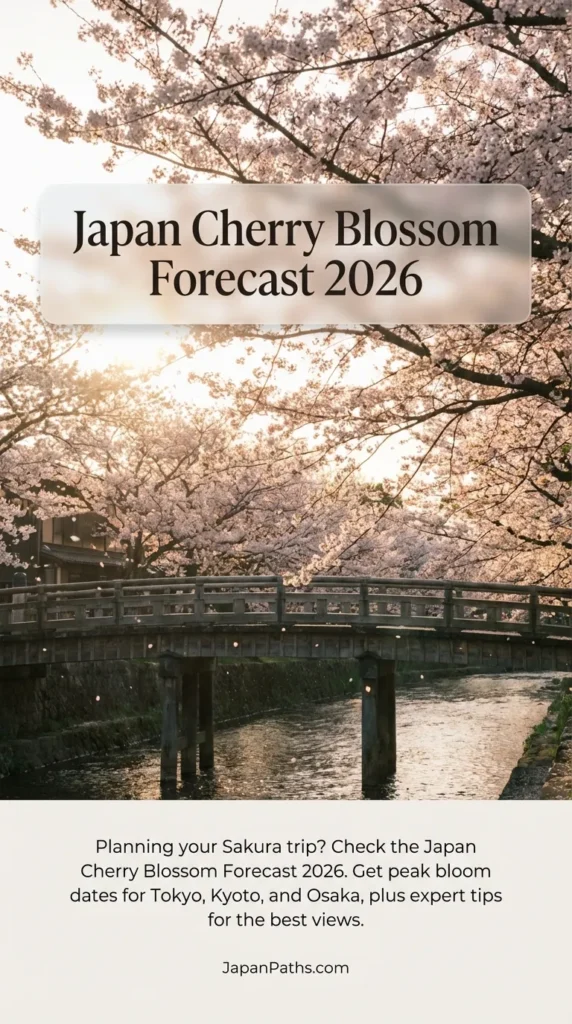
1. Tokyo: Peak bloom late March (Mar 20-31)
Tokyo’s cherry blossoms should start opening around March 20, 2026, according to the latest Japan Weather Association forecast. Full bloom is expected by March 28.
If you want the best views, try to visit during the last week of March. This timing is a little earlier than usual, so booking your trip soon is a good idea.
Cherry blossom season in Tokyo usually lasts about one to two weeks. Weather can shift the dates, so it’s smart to check updated forecasts as your trip gets closer.
Late March is when the city looks its best—parks, streets, and gardens fill with pink and white. The weather is generally mild, so it’s comfortable to walk around and soak up the views.
Try to arrive between March 25 and March 31 for your best shot at full bloom. That window gives you the highest odds before the petals start to fall.
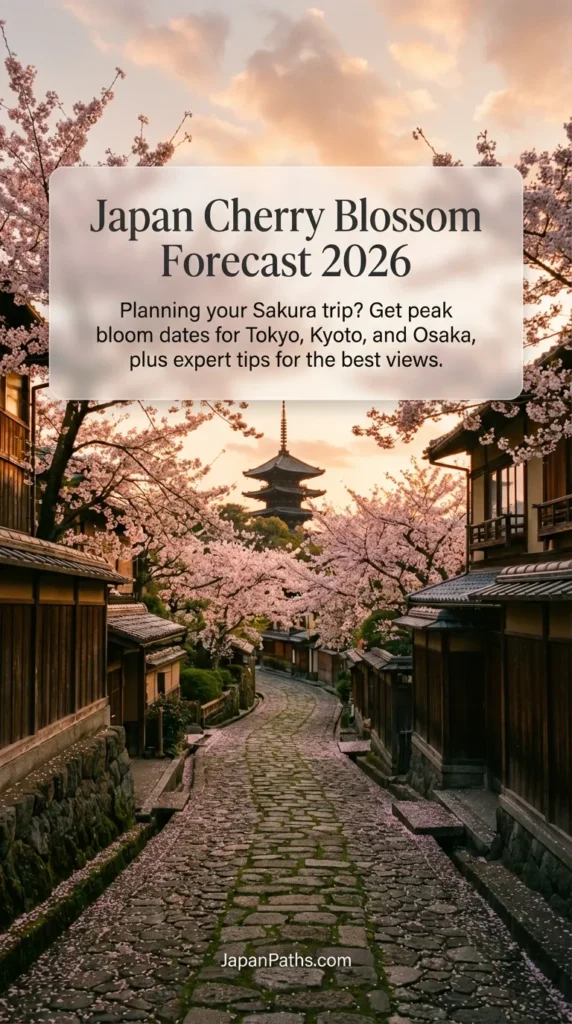
2. Kyoto: Best visit early April (Apr 1-10)
Kyoto is best in early April if you want to see the cherry blossoms at their peak. The 2026 forecast says the blooms will start around March 24, with full bloom by April 1.
The best viewing runs from April 1 to April 10. You’ll see sakura trees in their prime across the city’s parks and temples.
Kyoto is famous for its weeping cherry trees and double-flowered varieties. These create especially beautiful scenes at historic sites like Maruyama Park, the Philosopher’s Path, and Arashiyama.
I’d plan your trip for the last week of March through the first week of April. This gives you some flexibility if the bloom dates shift a bit due to weather.
The cherry blossom season in Kyoto usually lasts from late March to mid-April. You get about a week to ten days to enjoy the full bloom before the petals fall.
3. Osaka: Cherry blossoms peak early April
Osaka’s cherry blossom season usually runs from late March through early April in 2026. The peak bloom should fall in early April, which is just after Tokyo’s peak.
Osaka Castle Park is the city’s top spot for viewing. The thousands of cherry trees there look amazing against the historic castle. Nishinomaru Garden inside the park is a personal favorite for hanami.
The Okawa River is another great place for cherry blossom viewing. During peak season, the riverside walkways are lined with blooming sakura. Evening visits are popular since some areas have special light displays.
Expo ’70 Park is a good option if you want to avoid crowds. The park has around 35,000 cherry trees and usually holds weekend festivals in early April.
Plan your Osaka visit for the first two weeks of April. Since the weather can shift bloom timing by a few days, check forecasts as your trip approaches.
4. Nagoya: Full bloom late March
Nagoya is a great place for cherry blossom viewing in late March. The city’s sakura trees should start blooming around March 20, with full bloom about ten days later, around March 30.
As Japan’s third largest city, Nagoya has plenty of viewing spots without the massive crowds you’ll find in Tokyo or Kyoto. I actually prefer the more relaxed pace here.
The timing puts Nagoya in the early wave of cherry blossom season. You can catch peak blooms here, then head north to Kyoto and Osaka in early April.
The forecast is based on the Somei Yoshino variety, which is the most common cherry tree in Japan. March weather will affect the exact dates, but right now, earlier blooms than usual seem likely.
I’d plan your visit between March 25 and April 5 to catch the trees at their best. The city’s parks and historic sites look stunning with cherry trees lining the paths during this short season.
5. Fukuoka: Early bloom in late March
Fukuoka is one of the first places in Japan where cherry blossoms open each spring. Its southern location gives it an early edge.
For 2026, Fukuoka’s cherry blossoms should start blooming around March 21 or 22. Full bloom is likely by March 30, so the best viewing is probably March 28 through April 4.
I like Fukuoka for cherry blossom viewing because it’s less crowded than Tokyo or Kyoto. Maizuru Park and Nishi Park are two of the top spots, but the city has plenty of other beautiful areas too.
The forecast calls for slightly warmer temperatures, which supports the early bloom. If you want to catch the season at its start and avoid the big tourist rush, Fukuoka is a smart pick.
6. Hiroshima: Peak season late March
Hiroshima’s cherry blossoms usually hit their peak in late March. The 2026 forecast points to blooms starting around March 25, with full bloom in early April.
The city has several excellent viewing spots. Peace Memorial Park is especially moving, with cherry blossoms framing the historic monuments.
Hiroshima Castle is another popular spot, surrounded by cherry trees. The park grounds are perfect for hanami picnics under the blossoms.
If you plan to visit during peak season, book your hotel well in advance. Hotels fill up fast during cherry blossom season, sometimes six to nine months ahead.
The timing in Hiroshima lets you catch the blooms before Kyoto or areas farther north. It’s a good option if you’re in Japan in late March and want to see the sakura at their best.
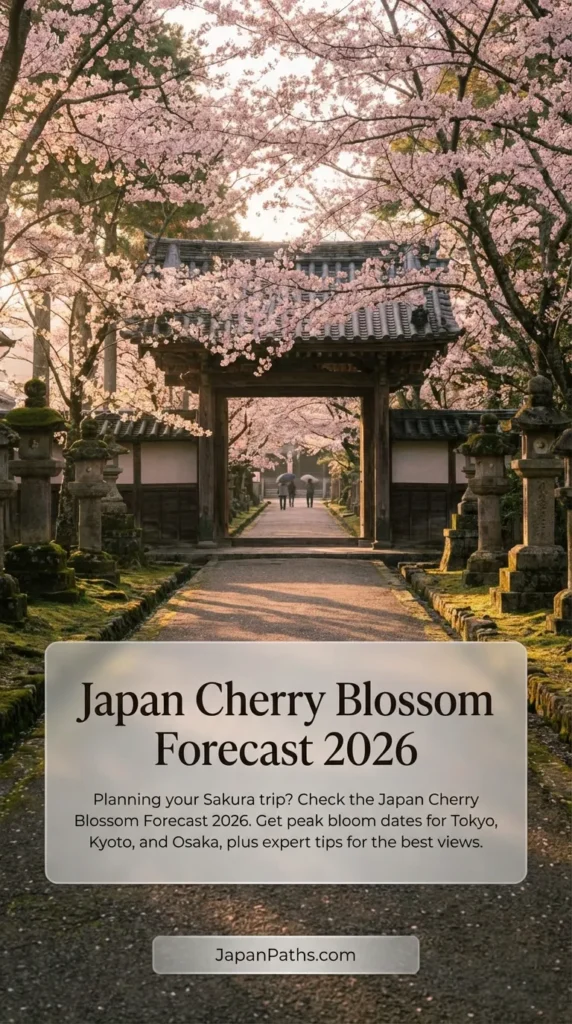
7. Nara: Visit during early April bloom
Plan your Nara visit for early April when cherry blossoms reach their peak. Blossoms usually start opening around March 26, with the best viewing around April 2.
Nara offers a unique experience. Cherry trees grow throughout open parkland and around old temples. You can walk through Nara Park and see deer under blooming sakura trees.
The city uses the Somei Yoshino variety, just like most of Japan. That makes timing your visit easier—just follow the standard forecast.
Nara is great if you want a more relaxed atmosphere. It’s less crowded than Kyoto or Osaka during peak season, and you can take a day trip from either city by train.
Mount Yoshino near Nara is worth a look if you have extra time. The mountain has thousands of cherry trees at different elevations, so the blooming period lasts longer there.
Try to visit Nara between April 1 and April 10 for the best chance at full bloom.
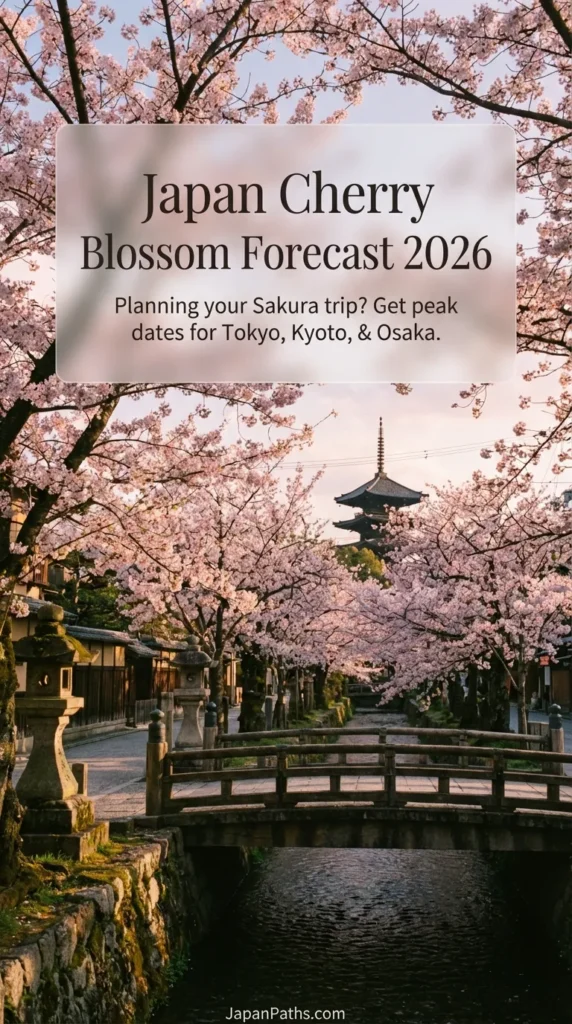
8. Sendai: Early April cherry blossom viewing
Sendai is perfect if you want to catch cherry blossoms in early April. The city’s sakura should start blooming around April 5, with full bloom about five days later, around April 10.
Nishi Park and Nishikicho Park are two of the best spots in Sendai. Both offer great views during peak bloom.
Sendai’s timing works well if you’re planning a northern Japan trip. The blooms arrive later than Tokyo or Kyoto, which gives you more flexibility.
The city is easy to reach by train from Tokyo, so you can add Sendai to your sakura route if you want to extend your cherry blossom adventure.
Plan to visit during the second week of April for your best shot at full bloom. Weather can shift the dates a bit, so check forecasts as your travel dates get closer.
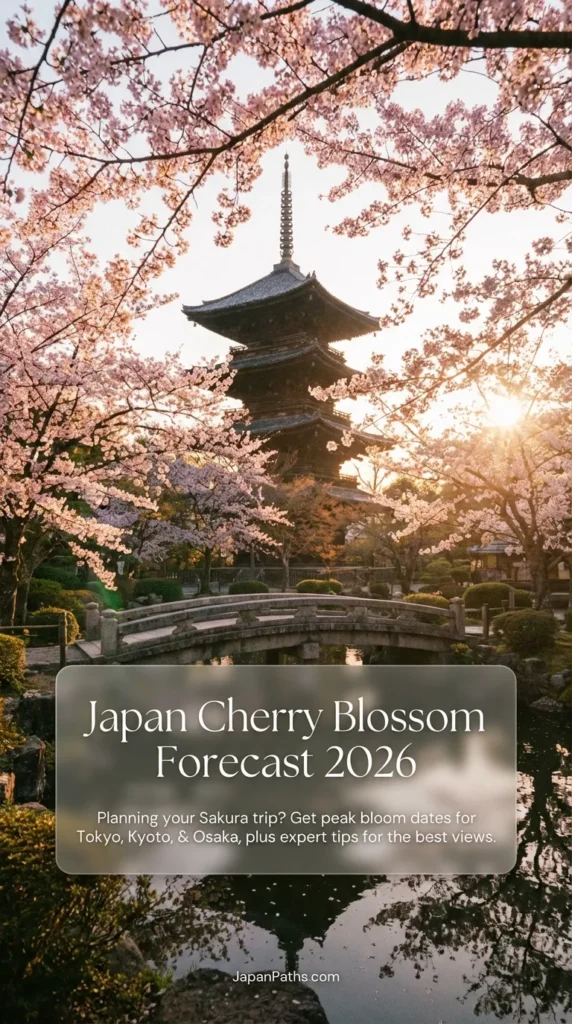
9. Kyushu region: Sakura season starts in March
Start your cherry blossom adventure in Kyushu, Japan’s southwestern island. Sakura season begins here each year.
The warm Kyushu climate means cherry blossoms open earlier than in most of Japan. Expect the first blooms in late March 2026. Cities like Fukuoka, Nagasaki, Kumamoto, and Oita are all good bets.
Kyushu’s landscape gives you lots of hanami options—cherry trees near hot springs, in parks, or along rivers. The scenery here really adds something special to the experience.
Late March is usually the sweet spot for peak bloom. Exact dates depend on the weather, but this timing works most years. If you travel from south to north, you can follow the sakura front for weeks.
The mix of early blooms, hot springs, and varied scenery makes Kyushu a fantastic starting point for your 2026 sakura trip.
10. Tracking sakura northward from Kyushu
I always suggest starting your cherry blossom tracking in Kyushu. Sakura season kicks off there each March.
From Kyushu, you can watch the cherry blossom front move north across Japan. The journey takes about two months from southern Kyushu to northern Hokkaido.
Daily updates help track where the sakura front is as it heads north. I find these updates essential for planning and catching the blooms at their best.
The Somei-Yoshino variety is the main one to watch—these pale pink trees are everywhere and set the standard for forecasts.
I also keep an eye out for weeping cherry trees, especially along rivers and in parks. They bloom around the same time and add some nice variety.
How the 2026 Cherry Blossom Forecast Is Determined
Weather experts use temperature data and computer models to predict when cherry blossoms will bloom each year. They track the most common cherry tree in Japan, the somei-yoshino, and update the forecasts as new weather info comes in.
Key Climatic Factors Influencing Bloom Times
Temperature is the main factor that decides when cherry blossoms open. The trees need cold winters to break dormancy.
Once they’ve had enough chill, they wait for warm spring weather to trigger blooming. Forecasters keep a close eye on February and March temperatures.
If those months run warmer than usual, blooms show up earlier. For 2026, meteorologists expect a warm March and April, so they’re calling for early blooms across Japan.
The trees track the build-up of warmth over several weeks. Scientists use “degree days” to measure how much daily temperature rises above a set point.
When the trees hit a certain warmth threshold, the buds pop open. Local conditions matter, too.
Cities usually see blossoms before rural areas because concrete and buildings trap heat. Southern regions always get blooms before the north.
Improvements in Forecasting Methods for 2026
Modern forecasts rely on advanced computer models that crunch decades of bloom data. The Japan Meteorological Corporation updates its predictions often.
The next update lands on February 19, 2026. After early March, updates come twice a week—Mondays and Thursdays.
These predictions are now impressively accurate, usually within a few days of the real bloom at most places. The models now consider more variables, like soil moisture and city heat spots.
Once blooms start, forecasters release daily reports. This way, travelers can tweak their plans as things change.
Cherry Blossom Viewing Etiquette and Cultural Significance
Cherry blossom viewing in Japan is packed with tradition and social rules. Visitors should really try to understand and respect them.
The practice of hanami celebrates spring’s fleeting beauty while reminding everyone to care for shared spaces and observe Japanese customs.
Understanding Hanami Traditions
Hanami literally means “flower viewing.” It’s one of Japan’s oldest cultural rituals.
The tradition celebrates the short life of cherry blossoms, which stands for the temporary nature of life in Japanese thinking. During hanami, folks gather in parks and along rivers to enjoy the blossoms.
Many people bring picnics, lay out blue tarps under the trees, and spend hours eating, drinking, and talking with friends, family, or coworkers. Some groups send someone early to grab a good spot by setting down a tarp.
Yozakura is a different vibe—it’s nighttime cherry blossom viewing. Parks light up the trees from sunset to around 9 or 10pm, making everything feel a bit magical.
Hanami festivals pop up all over Japan during blossom season. You’ll find traditional performances, food stalls with seasonal snacks, and special illuminations after dark.
Respectful Behavior at Blossom Sites
It’s important to follow a few basic rules at cherry blossom sites. Don’t shake the trees or pull on branches for photos or falling petals—the blooms are delicate and for everyone to enjoy.
Respect tarps marking reserved spots, even if no one’s there yet. Groups often claim spaces hours ahead and come back later.
Take your trash home or use the bins provided. Keep your noise in check, especially at temples and shrines.
Hanami can get lively, but some places expect a quieter mood. Stick to paths and avoid stepping on roots or flower beds.
If you want to drink alcohol, double-check if it’s allowed—some spots ban it, others have rules.
Frequently Asked Questions
Tokyo’s cherry blossoms should peak between March 20–31. Kyoto and Osaka will have their best viewing in early April.
The 2026 season is starting earlier than usual. Southern cities like Fukuoka and Nagoya will kick off the bloom cycle in late March.
What are the expected peak bloom dates for cherry blossoms in Japan in 2026?
Peak bloom dates shift by region in 2026. Tokyo should hit full bloom between March 20–31, making it one of the first places to see blossoms.
Kyoto and Osaka expect peak viewing during early April, especially April 1–10. Nagoya will see full bloom in late March, about the same as Tokyo.
Fukuoka should also get early blooms in late March. Cities farther north, like Sendai, won’t peak until early April.
Which regions in Japan will have the earliest cherry blossom blooms in 2026?
The earliest 2026 cherry blossoms will show up in Tokyo, Nagoya, Fukuoka, Gifu, and Hiroshima starting March 20. These cities are in southern and central Japan, where spring warmth arrives first.
Tokyo, Nagoya, and Gifu all start blooming around March 20. Fukuoka and Hiroshima follow in that same late March stretch.
The bloom moves north as spring rolls on. Northern cities get blossoms later thanks to cooler weather.
What are the best viewing spots for cherry blossoms in Tokyo in 2026?
I’d go to Ueno Park—it’s one of Tokyo’s top cherry blossom spots. You’ll find over 1,000 cherry trees and a classic hanami scene.
Shinjuku Gyoen National Garden is quieter and has several cherry tree varieties. Chidorigafuchi by the Imperial Palace is gorgeous, with blossoms along the canal.
Sumida River has great waterfront views lined with cherry trees. Yoyogi Park is another favorite, with wide open lawns perfect for picnics.
Are there any cherry blossom festivals in Kyoto in 2026, and if so, what dates do they fall on?
Kyoto hosts several blossom-viewing events during peak season in early April. Traditional hanami at temples and shrines runs from April 1–10.
Many temples hold special night illuminations during blossom season. These evening events usually match up with peak bloom.
Exact festival dates depend on each location and how the blooms progress. It’s best to check with specific temples and parks closer to your visit.
How does weather affect the cherry blossom season in Japan, and what was the forecast for 2026?
Weather is a huge factor for cherry blossom timing. Warm spells bring early blooms, while cold snaps push them back.
The 2026 forecast came out about three weeks earlier than usual thanks to a new system. The season should start earlier than normal in much of Japan.
Late winter and early spring temperature patterns decide the exact timing. Climate data says 2026 will probably see an earlier-than-average season, especially in the big cities.
What advice is there for travelers planning to visit Japan for the cherry blossom season in 2026?
If you’re thinking about seeing cherry blossoms in Japan, book your accommodations way ahead of time. Cherry blossom season gets packed, and hotels fill up fast.
Try to arrive a few days before the predicted peak bloom. Forecasts can change, and the flowers only last about a week in full bloom.
Head out early in the morning or pick a weekday afternoon if you want to dodge the biggest crowds. You might want to wander into lesser-known parks or quieter neighborhoods—sometimes those hidden spots end up being the most memorable for hanami.
March and early April weather can be all over the place, so bring layers. Toss in a light jacket for chilly evenings and wear comfortable shoes, since you’ll probably walk a lot.